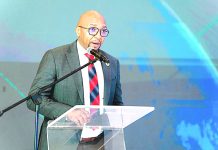

His Majesty King Mswati III is expected to pass on the baton of chairing the African Union (AU) Peace and Security Council (PSC) to another leader.
The king only had a month to try and broker peace and stability through being appointed as the chairperson of the PSC only for last month. The chairmanship rotates monthly among the 15-member states of the PSC.
As chairperson, the king was tasked with guiding the council’s efforts in addressing issues of peace, security and conflict management across the continent. The council’s priorities include addressing coups, unconstitutional changes of government, terrorism, insurgencies, election-related violence, peacekeeping missions, and mediation efforts.
Minister of Foreign Affairs and International Cooperation Pholile Shakantu, in a previous interview spoke about the kingdom’s active engagement in peace efforts. She revealed that “engagements have already begun”, noting that the council would be sending delegates to conflict zones to initiate talks and other peace-building strategies.
She acknowledged the enormity of the task but expressed confidence in the country’s ability to make a meaningful contribution under the king’s leadership.
“We are confident that with Ingwenyama’s leadership, Eswatini will contribute to resolving conflicts and restoring peace, even within the Southern African Development Community (SADC) region,” she said.
However, veteran political analyst and former political science lecturer at the University of Eswatini (UNESWA), Dr PQ Magagula, wondered about the philosophy of the AU in according head of states just one month in trying to resolve wars and political tensions on the continent.
“One month seems too early as I think the chairperson would still be trying to organise documents and orient themselves. After that, they must engage in a thinking process in order to make out the kind of interventions they can make to change things,” said Magagula.
He said one month is as good as an orientation stage only. Nonetheless, the former lecturer did not hide his curiosity behind the rationale of giving a leader only one month in the chairperson seat for the PSC.
Online political commentators viewed the AU’s system of one-month as designed to give different countries an opportunity to assume leadership positions, preventing a concentration of power in the hands of a few nations.
The rotation allows all member states to have an equal stake in the leadership of key AU bodies, such as the PSC. The system ensures that every African country, regardless of size or influence, gets a chance to steer the PSC.

However, a key criticism of the rotating chairmanship is that a one-month term might not be long enough for any leader to fully engage with the complexities of the issues at hand.
Long-term crises, like conflicts in Sudan, South Sudan, or the Sahel require sustained leadership and commitment, which a short-term chairmanship might struggle to provide.
There are at least 11 major conflicts which are currently ravaging Africa and many of them are among the deadliest and most destructive in recent history.
In Sudan, the brutal civil war between the Sudanese Armed Forces (SAF) and the Rapid Support Forces (RSF) has led to tens of thousands of deaths, with the death toll expected to rise to over 150 000.
The conflict has displaced over 12–14 million people, creating a severe humanitarian crisis with famine looming on the horizon.
In the Democratic Republic of Congo, the eastern region remains a volatile war zone, plagued by more than 100 armed groups, including M23 and ADF militants.
The groups are responsible for mass killings and the displacement of over seven million people.
AU-PSC CHAIRPERSONS
• King Mswati III (Eswatini) – March 2026
• President Félix Tshisekedi (Democratic Republic of Congo) – February 2026
• President Samia Suluhu Hassan (Tanzania) – January 2026
• President Muhammadu Buhari (Nigeria) – December 2025
• President Uhuru Kenyatta (Kenya) – November 2025
• President Abdel Fattah el-Sisi (Egypt) – October 2025
• President Cyril Ramaphosa (South Africa) – September 2025
• President Macky Sall (Senegal) – August 2025
• President Paul Kagame (Rwanda) – July 2025
• President Mohamed Abdullahi Farmaajo (Somalia) – June 2025
• President Idriss Déby (Chad) – May 2025