
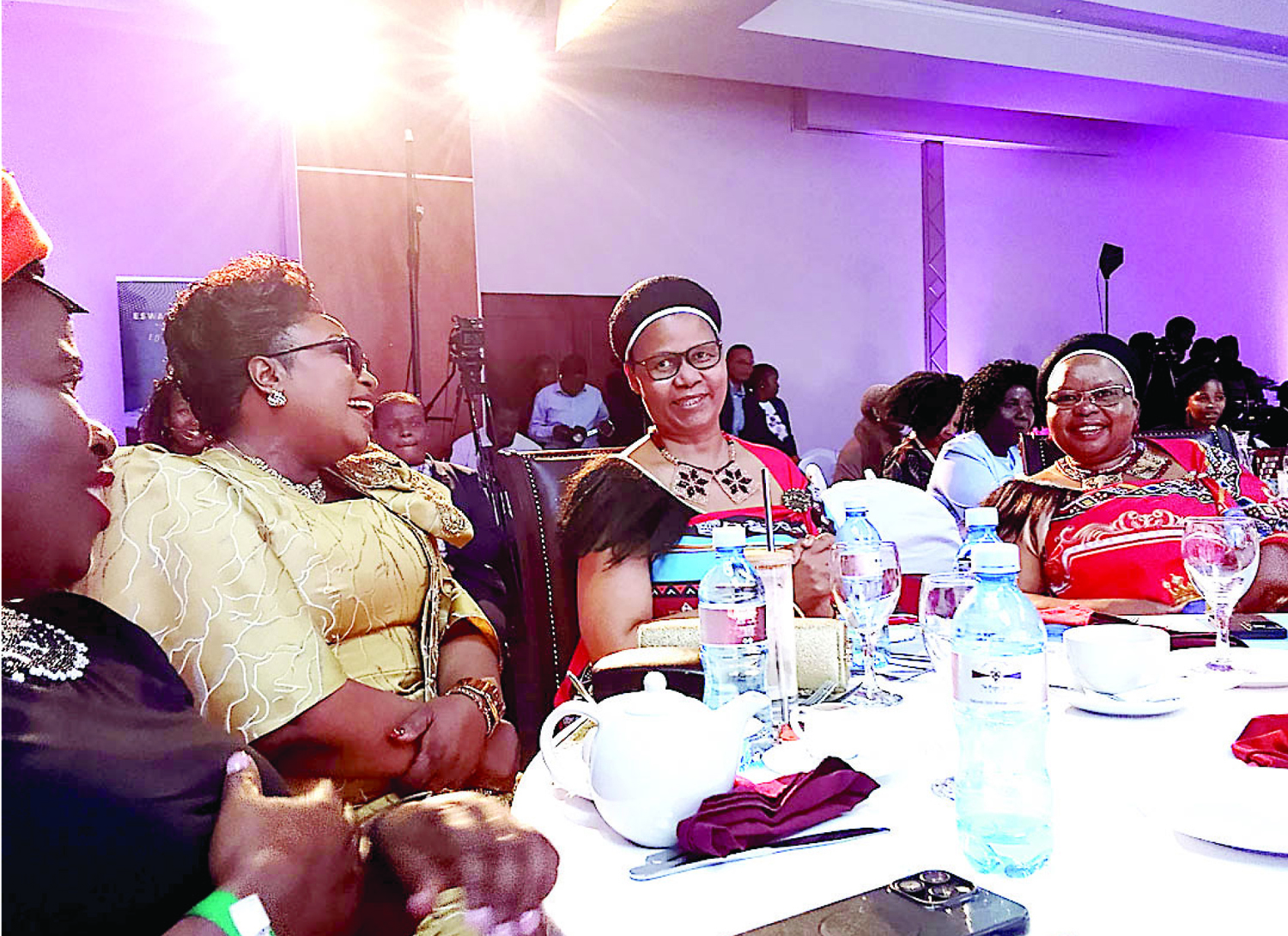
Businesswoman Sylvia Mthethwa has challenged Southern African countries to position women as owners, investors, employers and decision-makers.
Mthethwa said economic transformation in the region would remain incomplete if women were only brought into important conversations after key decisions had already been made.
She was speaking during the second annual Women’s Month Thought Leadership Event held at Royal Villas on Saturday under the theme, ‘The Role of Women in Growing Southern Africa’s Economies’.
Drawing from her journey from humble beginnings to entrepreneurship, public service and regional leadership, Mthethwa said women needed to develop the confidence to take opportunities and leadership positions rather than waiting for permission or recognition.
Mthethwa, who built and led Progress Group of Companies for three decades, said her entrepreneurial journey had taught her that sustainable success required patience, discipline, reinvestment and resilience.
She recalled growing up in a stick-and-mud house, saying her humble origins did not define the limits of what she could achieve.
“Some people may look at such a beginning and see limitation, but I look at it and see strength,” she said.
She added that her experiences in business and public service had reinforced the importance of women occupying spaces where economic and policy decisions were made.
Mthethwa served as the first woman regional administrator of Lubombo, a position she said taught her that meaningful progress was not achieved by creating divisions between men and women.
“Progress does not come when women stand on one side and men stand on the other. It comes when we sit at the same table, respect one another’s strengths and work together for the good of the people we serve,” she stated.
The businesswoman also argued that women’s advancement should not be viewed as a threat to men, but as a partnership that benefits society as a whole.
“When a woman rises, she does not need to push others down. She can open the circle wider,” Mthethwa said.
She said women across Southern Africa were already contributing significantly to their economies through entrepreneurship, agriculture, retail, technology, manufacturing, cross-border trade and household economic activity.
However, she warned that their contribution was not being matched by equal access to the systems and opportunities required to grow their enterprises.
“If Southern Africa is serious about growth, then women cannot be treated as beneficiaries of development only. Women must be recognised as builders of development,” she said.
Mthethwa called for women to be deliberately positioned as business owners, exporters, investors, employers, innovators, board members, policymakers and decision-makers.
She identified access to finance, collateral, business networks, information, procurement opportunities, mentorship and digital tools as some of the barriers that continue to restrict women-led businesses.
She said regional initiatives such as increased trade and the African Continental Free Trade Area (AfCFTA) presented opportunities for women entrepreneurs to access markets beyond their respective national borders.
However, Mthethwa cautioned that the existence of such opportunities on paper did not necessarily translate into practical access for women.
Mthethwa also called for a shift from simply employing women to deliberately preparing them for leadership.
INSTITUTIONS URGED TO BACK WOMEN-LED BUSINESSES
The private sector, financial institutions and governments have been urged to remove structural barriers preventing women-owned businesses from growing and becoming competitive.
Speaking during the second annual Women’s Month Thought Leadership Event, businesswoman Sylvia Mthethwa called on companies to include women-owned enterprises in their supply chains, make procurement opportunities accessible and pay small businesses on time.
She also challenged financial institutions to reconsider traditional lending models that often exclude women who lack conventional collateral.
Mthethwa called on governments to introduce policies that make it easier for women and young people to start, formalise, finance and scale businesses.
She further urged established leaders to support emerging women rather than protect their positions.
“Do not guard the ladder, but lift as you climb,” she advised.
Mthethwa further encouraged young women not to allow their backgrounds to determine the limits of their ambitions, urging them to start with available resources, seek help and persevere through setbacks.
She said empowering women was not merely a social responsibility but an economic strategy capable of strengthening families, making communities more resilient, driving business innovation and improving national competitiveness.
AI FORCING PROFESSIONALS TO RETHINK SKILLS – MANTSHIMULI
Artificial intelligence (AI) is forcing professionals to develop broader, context-driven skills as technology increasingly automates conventional jobs.
Muima Consulting Director Tendani Mantshimuli said professionals could no longer rely solely on deep expertise in one field, arguing that they must develop skills that AI cannot easily replicate, particularly an understanding of human and business contexts.
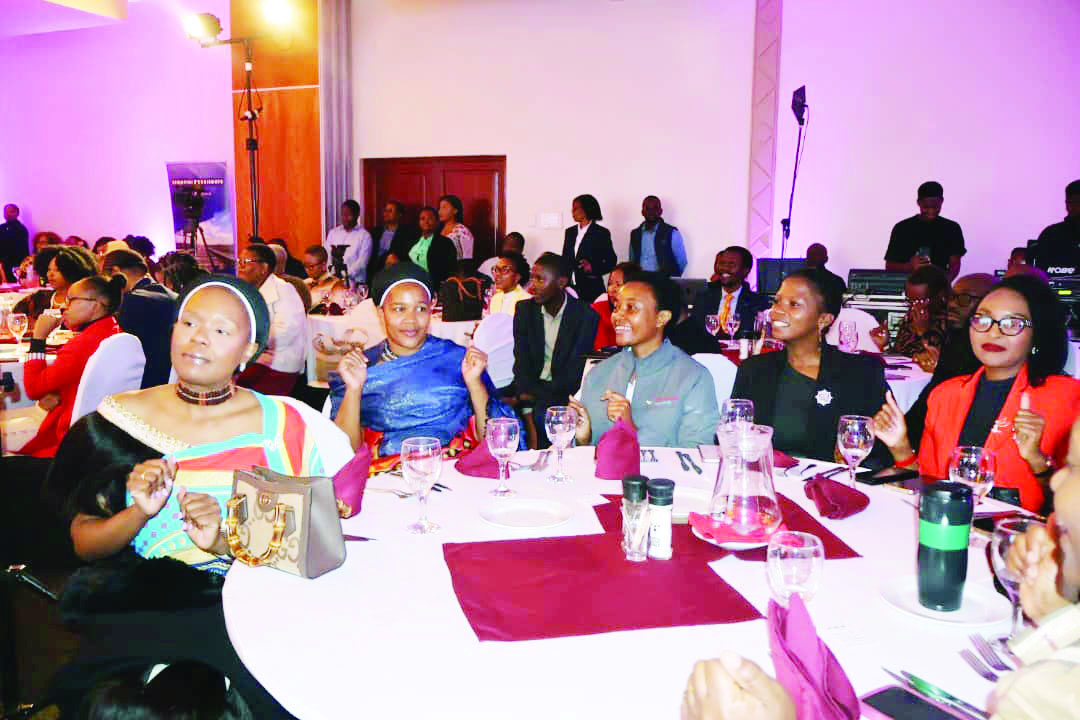
Mantshimuli was a panellist at the second annual Women’s Month Thought Leadership Event held at Royal Villas on Saturday.
She was speaking during a panel discussion on ‘Developing Market-Relevant Skills for Regional Growth and Integration’, where panellists examined the skills mismatch affecting different sectors.
The discussion also highlighted skills gaps in specific industries.
She said the skills mismatch should not simply be viewed as a shortage of appropriately qualified people, but as an indication that policies and skills-development systems had not been deliberately designed to meet market needs.
“A mismatch is an output. It is in the design that you have repeated,” Mantshimuli said.
She called for intentional policies that clearly define the type of human capital required and establish measurable outcomes aimed at closing skills gaps.
Mantshimuli also challenged professionals to look beyond national borders, saying regional integration required workers to understand different regulatory environments across Southern Africa.
She said professionals with cross-border regulatory knowledge were more employable than those whose expertise was confined to their home jurisdictions.
According to Mantshimuli, professionals should develop what she described as a “T-shaped” skill set — deep expertise in a particular field combined with broad knowledge of how the region operates.
“We are talking about Southern Africa. We are not talking about Eswatini, South Africa or Botswana, but the region as a whole,” she said.
However, Mantshimuli said the emergence of AI made this broader approach even more urgent.
She noted that as AI became capable of automating certain jobs and performing tasks traditionally requiring human skills, professionals needed to identify and strengthen capabilities that technology had not yet been able to replicate effectively.
“What AI has not managed to replicate as yet is the nuances and the context around which business operates,” she said.
She argued that understanding the context in which businesses operate would help professionals remain relevant even as AI transformed workplaces.
Meanwhile, FNB Eswatini Chief Operating Officer Thandeka Dlamini said the country’s finance sector’s challenge was not necessarily a shortage of qualified people, but the inability to translate qualifications into practical execution.
She advocated for a shift from a qualification-led model to a capability-led model, where employers focus on what candidates can practically do and the problems they can solve.
Dlamini further identified an experience gap, arguing that internships and workplace exposure should equip young professionals with an understanding of the practical issues confronting organisations.
African Rail Industry Association representative Mesela Nhlapho and Eswatini Railways CEO Nixon Dlamini also participated in the discussion, which was moderated by Sinethemba Dlamini.
The panel agreed that closing the skills gap would require stronger links between education, industry and workplace experience, while preparing professionals for an increasingly technology-driven regional economy.