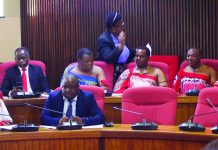




Members of Parliament (MPs) have raised concerns about the conditions under which they perform their legislative and oversight responsibilities Mbabane East MP Welcome Dlamini said some legislators are forced to work from their vehicle boots because they do not have offices.
The concerns were raised during debate on the prime minister’s office second-quarter performance report in Parliament yesterday where the PM was represented by Deputy Prime Minister Thuli Dladla.
Dlamini said MPs lacked proper facilities to conduct their work, including offices where they could meet members of the public who approach them with different concerns.
He said some MPs had to meet people in unsuitable places when constituents needed to consult them, while others effectively used their vehicles as working spaces.
The MP said legislators needed offices, assistants and researchers to help them prepare for parliamentary debates and scrutinise government business.
He observed that in other countries, MPs were provided with offices and research support to enable them to perform their duties effectively.
Dlamini said the working conditions of MPs needed attention, considering the important role they play in government and the responsibilities entrusted to them.
He said MPs were an important arm of government and needed to be adequately equipped to carry out their responsibilities.
Dlamini also raised concerns about the country’s dependence on external funding, questioning what would become of the country after the Global Fund withdrew its support.
He cited that the country currently received US$27.8 million, equivalent to approximately E473 million for programmes in the country and called for preparations to start ahead of the end of the current funding cycle to self-sustain as a country.
He further raised concerns about the reported deaths of 42 men through suicide, asking what could be done to address the problem and provide assistance to men.
Dlamini also questioned what government was doing to ensure that survivors of gender-based violence received counselling and the necessary support.
Meanwhile, Nkomiyahlaba MP Mduduzi Dlamini said MPs needed to be empowered so that they could appreciate the importance of the parliamentary system and make meaningful contributions during debates.
He said legislators needed support to understand the parliamentary system and effectively participate in its processes.
The concerns about MPs’ capacity to carry out their responsibilities were also reflected in calls for more research support, with legislators expected to scrutinise government programmes, policies and expenditure.
Meanwhile, Lobamba MP Michael Masilela called for comprehensive education reform at the University of Eswatini (UNESWA), questioning whether continued financial assistance would resolve the institution’s .
Masilela argued that even if the university was given money, it would continue accumulating debts if its underlying challenges were not addressed.
He questioned what the country could do to address the institution’s situation, raising the possibility of transforming it into a Southern African Development Community (SADC) university or retaining it in its current form.
The MP called for a broader examination of the university’s structure and the challenges affecting its operations.
Other concerns raised during the parliamentary engagement included the possibility of merging some government ministries and the size of the national budget, with other MPs questioning government expenditure on trips, among other costs.
…Question proposed removal of intelligence from police
Members of Parliament have questioned the reported intention to remove intelligence from the police, calling for clarity on the reasons behind the proposed change and warning against disrupting established structures.
The MPs questioned why intelligence had initially been placed within the police structure if government was now considering removing it. They also wanted to understand the purpose of the proposed change and its implications for the country’s security arrangements.
Mbabane East MP Welcome Dlamini questioned whether the decision would be reversed if a future prime minister considered it necessary to return intelligence to the police.
He cautioned against frequently changing government structures, arguing that established arrangements should not be disrupted without clear reasons.
The issue also raised concerns about the sensitive nature of intelligence work, with Dlamini arguing that such matters should not be discussed publicly.
Nkomiyahlaba MP Mduduzi Dlamini further called on the national commissioner of police to address the matter speedily.
However, the concerns were raised in response to reports of a possible change, and clarification is still required from government on whether a formal decision has been taken.