


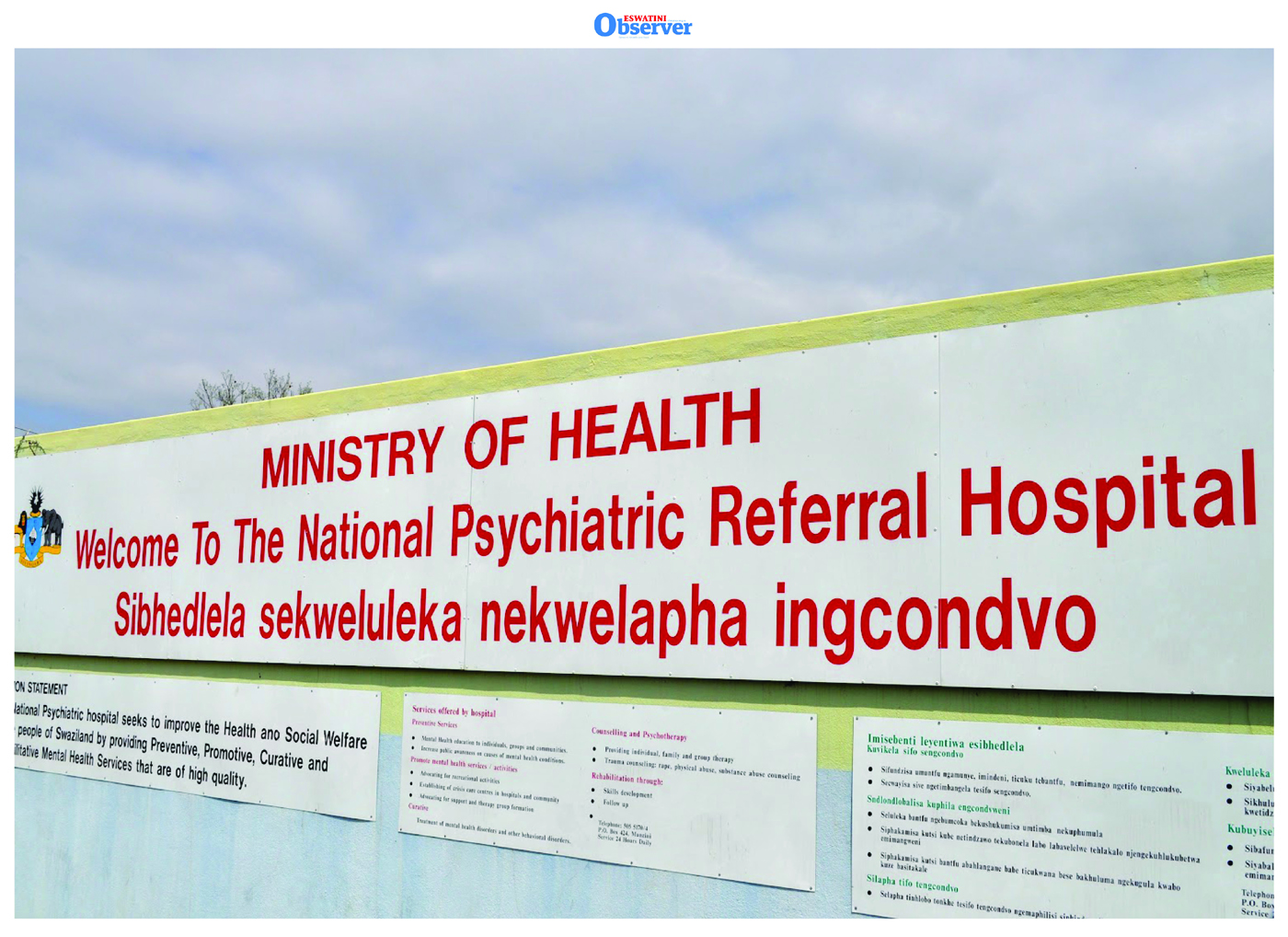
Orderlies at the National Psychiatric Referral Hospital in Manzini have accused the administration of placing their lives at risk by refusing to implement a two-shift system.
They said the current three-shift arrangement left them overworked, exposed to violent patients and without adequate support.
The aggrieved workers yesterday picketed outside the hospital before presenting a petition to the administrator, detailing what they described as unsafe working conditions and a lack of engagement by management.
They said the three-shift system left only one orderly to care for more than 60 patients in each ward, increasing the risk of assault while attending to violent psychiatric patients.
According to the workers, several orderlies had sustained serious injuries over the years, with some losing fingers, parts of their ears and suffering other physical assaults while on duty.
They alleged that despite reporting these incidents to management, the only assistance they received was pain medication and verbal apologies.
The workers further claimed that although government provides for overtime payments where applicable, the administrator allegedly refuses to approve their overtime claims.
They also said they did not receive hardship allowances despite the hazardous nature of their work.
The orderlies argued that physically handling violent psychiatric patients was not part of their original job description.
They said their core responsibilities were cleaning hospital wards, floors, surfaces and ablution facilities, requisitioning cleaning materials, and collecting and washing laundry.
However, they said their duties had expanded significantly due to the nature of the patients at the hospital.
They said their current duties included responsibilities that went far beyond housekeeping.
According to the workers, they were required to receive and manage violent psychiatric patients upon admission, provide security to patients around the clock, physically restrain aggressive patients, separate patients involved in fights and ensure patients remained safely confined within the facility.
They further stated that they escorted patients to educational and recreational activities, maintained order during medication and meal times, observed patients for unusual behaviour and reported concerns to nurses.
They also socialised with patients as part of their rehabilitation, supervised them during the day and monitored sleeping arrangements throughout the night.
The orderlies said they performed these responsibilities in close collaboration with professional nurses to ensure the delivery of quality mental health services, yet received no additional remuneration for the expanded role.
They also complained that their numbers had steadily declined due to retirements and deaths, with vacant posts remaining unfilled.
According to the workers, each ward should ideally have at least seven orderlies.
However, staff shortages under the current three-shift system meant only one orderly was assigned to more than 60 patients per shift.
They argued that introducing a two-shift system would allow four orderlies to be deployed in each ward at any given time, improving patient care and enhancing staff safety.

The workers further claimed they had repeatedly engaged the administrator on the matter and that the Ministry of Health had already agreed in principle to the introduction of the two-shift system.
However, they alleged that the administrator had refused to sign the necessary instrument to formalise its implementation.
“Our relationship with the administrator is almost non-existent because there is no platform for proper engagement on issues affecting us and our work.
“The administrator has been here for about seven years, but we have only had one formal meeting,” they alleged.
After failing to reach an agreement with the administrator, the workers resolved to send representatives to the Ministry of Health to seek intervention.
The ministry’s Under Secretary, Anthony Masilela, confirmed that representatives of the orderlies had met them over the matter.
However, Masilela said they were unable to immediately provide a comprehensive response because documents relating to the matter could not be located at the time.
“We previously dealt with the orderlies’ issues while our chief health administrator was still in office. She retired in May and her vacancy has not yet been filled,” said Masilela.
Nonetheless, he said the required documents would be sought.