



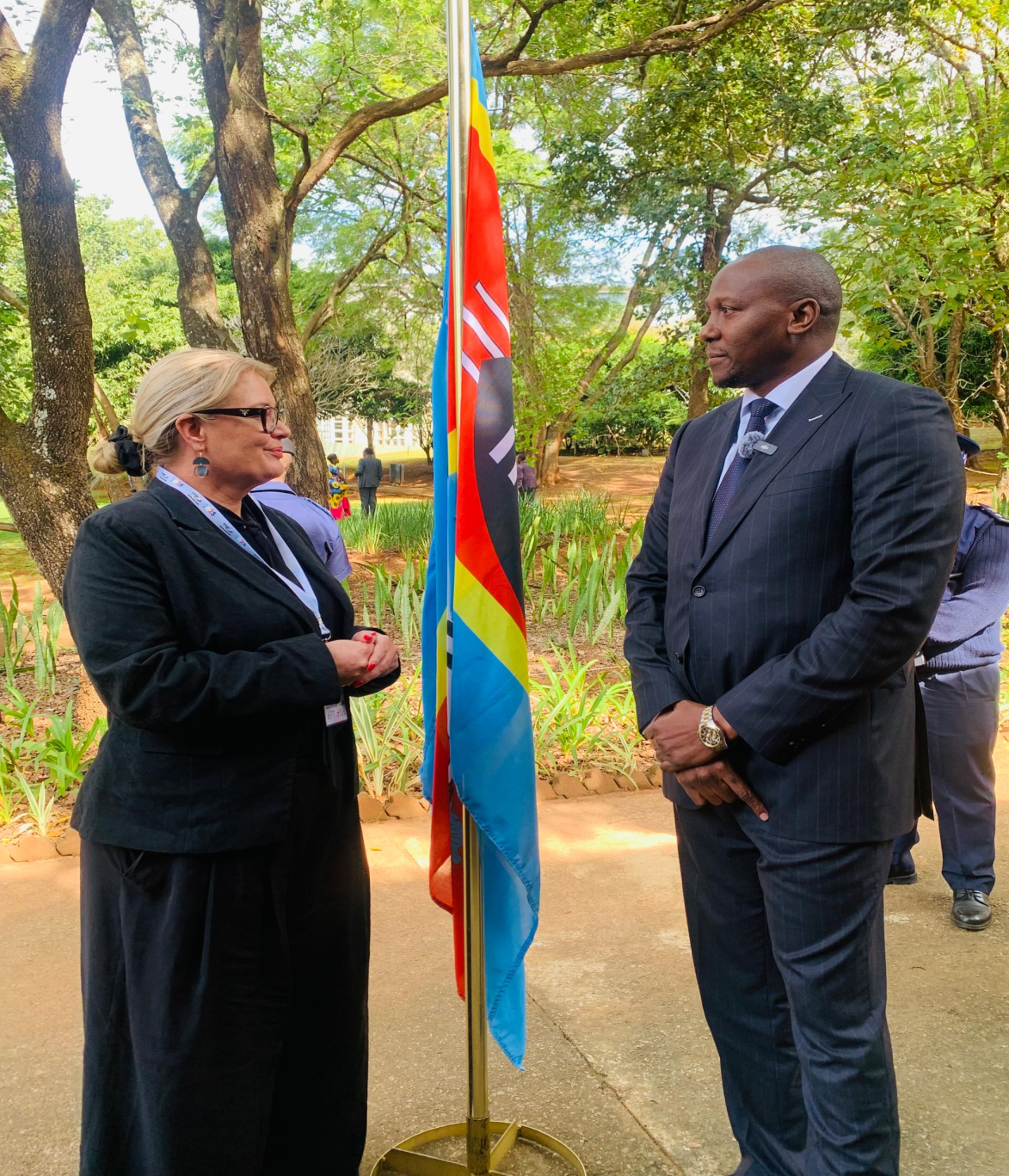
Prime Minister Russell Dlamini has outlined the country’s expansion plans for the aviation industry and railway sector.
On aviation, the country aims to increase the fleet of airplanes, enhance cabin sizes, and establish direct flights from destinations outside of Africa.
Speaking on the sidelines of the Eswatini Investment Conference held last week, Dlamini explained that Eswatini Air was a government-owned company, and the expansion plan would also focus on making it more profitable.
he shared that the country intended to improve Eswatini Railway by expanding the railway line.
Dlamini stated that the goal was to develop a dual railway line, adding that the country had also collaborated with South Africa on the expansion.
Additionally, he noted the desire to expand the country’s dry port. According to Dlamini, this expansion will also include a commuter railway linking the airport to hotels in the long run.
“It is on the radar and could be fast-tracked with the right investor on board,” he said.
Meanwhile Eswatini Railway is set to invest E1 billion in a major expansion of its dry port in Matsapha, aiming to enhance logistics and support the country’s growing manufacturing and agricultural sectors.
Eswatini Railway Chief Executive Officer Nixon Dlamini shared details of the ambitious project in an interview with Railways Africa Magazine, stating that the expansion would occur in three phases.
The first phase involves extending the rail line to the outer perimeter, while the second phase will see the removal of the current CTA building to create additional space, the last phase would also include the construction of a new officeand control centre.
Dlamini emphasised the importance of the Matsapha dry port, stating it was one of their major stations and the main gateway for import and export.
“It is strategically located in the heart of the country’s industrial area, which hosts numerous manufacturing industries,” he said.
With the growth in manufacturing and agriculture, the need for efficient transportation of goods had become critical.
Dlamini noted that products manufactured in the area required rail transport to reach sea ports, highlighting the port’s role in bulk logistics for local industries.
Originally established as a small facility in the 1990s, the dry port has grown significantly and is now a vital hub for the transportation of general goods, including major contributions from the sugar industry.He highlighted that the sugar sector was one of their major customers.
“We are working closely with government to explore further opportunities,” Dlamini added.