


Public sector unions (PSUs) have vowed to intensify pressure on government, insisting that they will not relent until what they describe as “their dues” are fully paid.
This comes amid a dispute over the non-implementation of annual notching for public servants.
In a statement issued yesterday, Minister of Public Service Mabulala Maseko said government and the PSUs had lawfully concluded a collective agreement in October 2025 to implement Scenario 3 of the salary review report, developed after a comprehensive remuneration exercise across the public service.
The total cost of full implementation was estimated at E1.643 billion.
He explained that, due to fiscal constraints, the parties agreed to a staggered implementation over the 2025/26 and 2026/27 financial years to safeguard macroeconomic stability.
Government said it has already implemented the first phase in October 2025 at a cost of E800 million, with the remaining E843 million—covering 85% backpay and allowances—scheduled for payment in July. It maintained that it has not withdrawn or altered its obligations under the agreement. However, it argued that annual notching was not anticipated or budgeted for within this framework, noting that employees had already received adjustments under the salary review and are set for further increases upon full implementation.
Government further stated that introducing notching at this stage would add an estimated E195 million to the wage bill, potentially undermining service delivery and other fiscal commitments. It added that it had, nonetheless, proposed a limited application of notching for Grades A and B, which unions rejected, and reiterated its commitment to continued engagement and fiscal prudence.
In response, Swaziland National Association of Teachers (SNAT) Secretary General Lot Vilakati said civil servants would be transported in buses to Mbabane on Monday to submit petitions to Cabinet and public service offices, adding that the demonstration had received municipal approval. He said unions would “exert pressure until government gives us our dues,” insisting that notching must be implemented this year and warning that there would be no teaching if the matter remains unresolved.
Vilakati further claimed that government was mistaken in its interpretation of the agreement, arguing that implementation had already been concluded and that workers were demanding what is rightfully owed. He rejected the minister’s statement as “unlawful and invalid,” arguing that it should have been issued through the Government Negotiating Team rather than the minister, and accused government of misrepresenting the financial position while failing to prioritise workers’ remuneration.
RELATED | PSUs MASS MEET: ‘Notching a right’
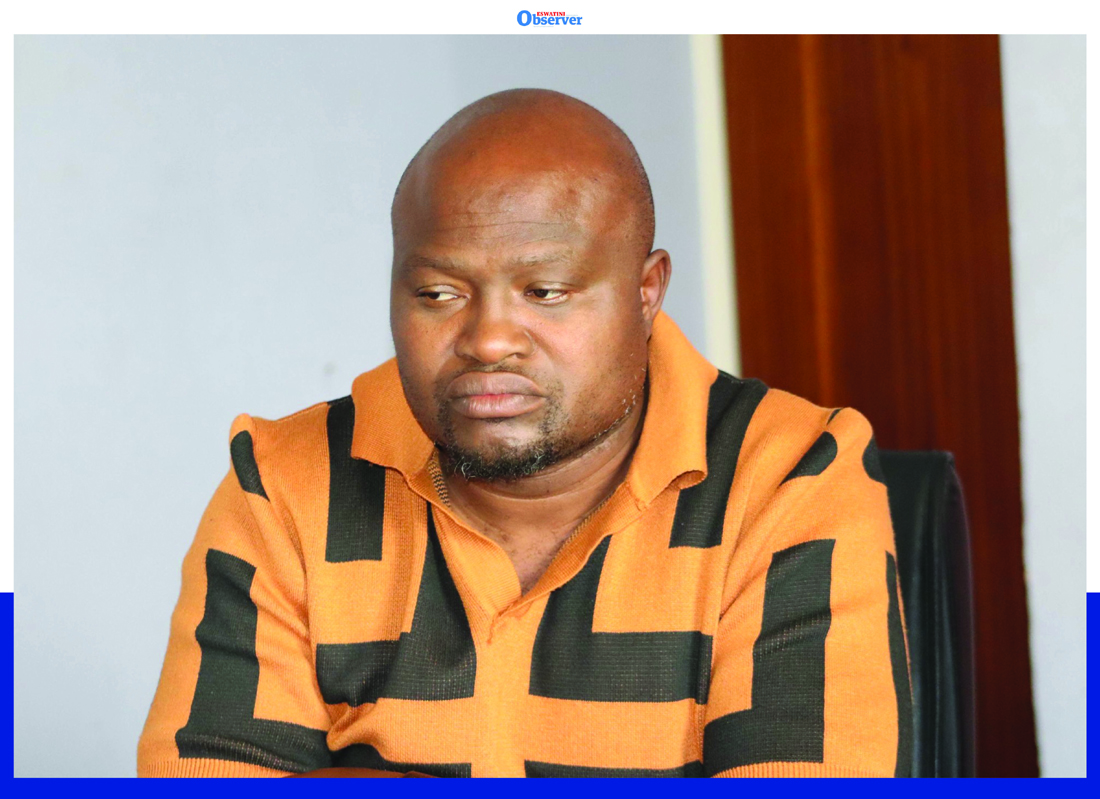
Meanwhile, National Public Services and Allied Workers Union (NAPSAWU) Deputy Secretary General Msimeto Malindzisa disputed government’s position, arguing that the October 2025 payment related to a 12-month salary cycle beginning in April 2025 and should not be conflated with notching.
He further said the grading process remained unclear, claiming it was not uniformly applied across the public service and that some employees appeared to have been excluded or inappropriately classified. Malindzisa added that government should not present the salary review as a concession, stressing that workers view notching as an entitlement rather than a favour, concluding that ‘a due is a due’.
…Question govt’s characterisation of their conduct
Public sector unions (PSUs) have questioned government’s characterisation of their conduct during Joint Negotiations Forum (JNF) engagements, asking pointedly: “What politics?”
This follows a strongly worded statement by Minister of Public Service Mabulala Maseko, in which government condemned what it described as a recurring and unlawful practice of union leaders attending JNF meetings accompanied by large numbers of members under the guise of support.
In the statement, government argued that such conduct had no basis in the JNF Constitution, labour laws, or established codes of good practice. It further stated that these gatherings often spill outside official venues, where members assemble in what it termed unlawful gatherings, marked by the singing of political songs and behaviour resembling political rallies.
Government expressed concern that, in some instances, inflammatory and unacceptable remarks were directed at government officials, members of the Government Negotiating Team (GNT), and security forces.
It maintained that such actions undermine orderly collective bargaining processes and constitute a breach of professional and institutional standards.
Government reiterated that the JNF is a legally constituted platform intended for structured and constructive engagement on matters of employment conditions, not a space for political mobilisation, intimidation, or public disorder.
It further emphasised that security forces have a constitutional mandate to protect the State and its citizens, warning that any conduct perceived to undermine their authority, dignity, or safety would be addressed in accordance with the law.
Government called on union members to confine their participation to lawful and substantive issues, and to avoid politicising workplace engagements, while reaffirming its willingness to continue negotiations in good faith within the confines of legal and institutional frameworks.
Responding to the statement, National Public Services and Allied Workers Union (NAPSAWU) Deputy Secretary General Msimeto Malindzisa dismissed the allegations, maintaining that there was no political agenda behind the unions’ actions.
He explained that the singing of political songs is a common feature of such gatherings and reflects the atmosphere of the moment rather than any organised political mobilisation.
Malindzisa argued that such practices are not unique to Eswatini but are part of labour movements worldwide. He suggested that government’s reaction indicated an intolerance of criticism, stressing that all leadership structures are subject to scrutiny and that government is no exception.
“Perhaps then, government can give us songs to sing in such gatherings,” he said.