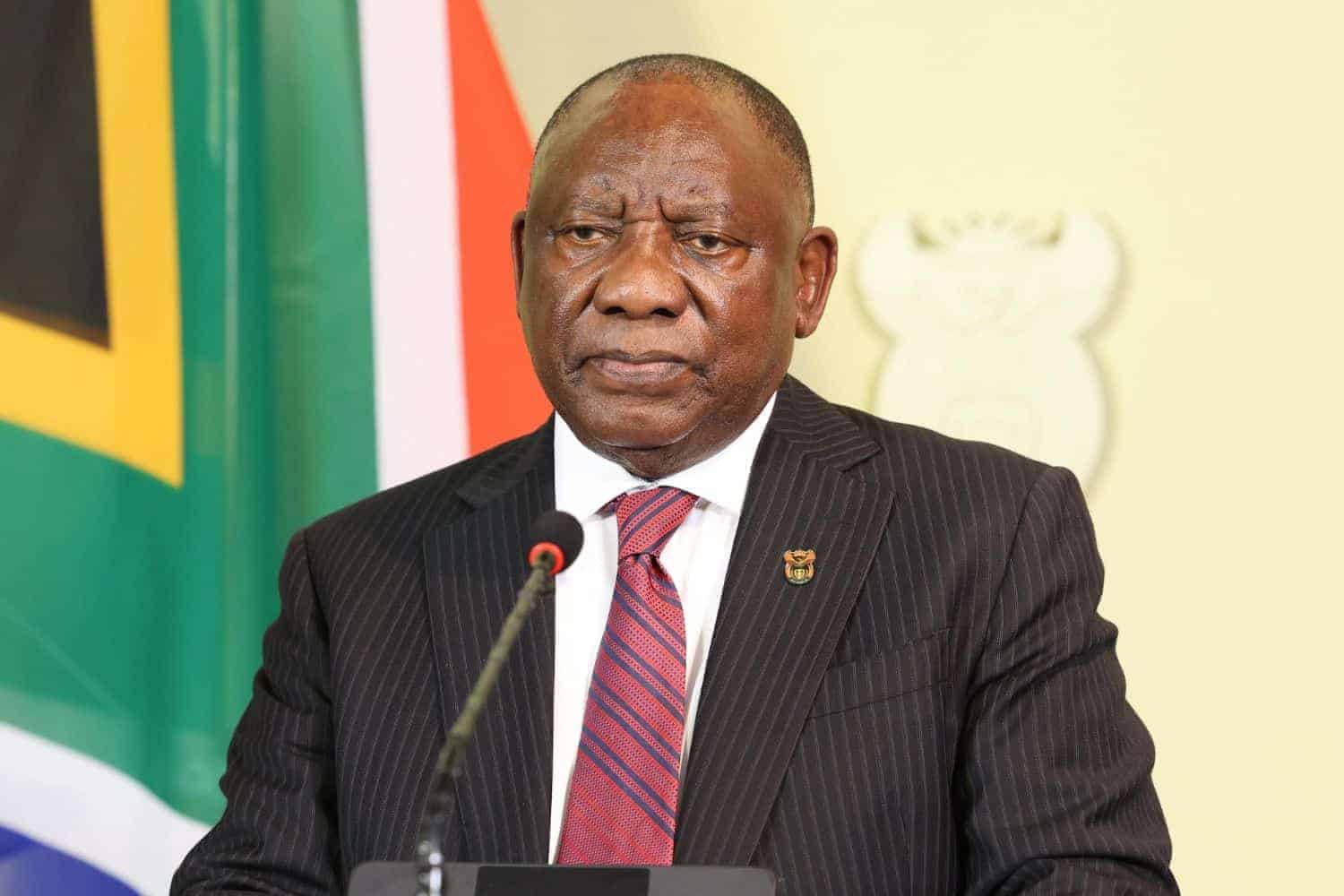
PRETORIA – President Cyril Ramaphosa on Sunday announced five actions the government will be implementing to tackle growing frustrations around immigration and illegal migrants. The president’s address comes amid ongoing protests targeting undocumented migrants.
Anti-immigrant tensions have been reported in parts of South Africa, including the Western Cape, KwaZulu-Natal and Gauteng. Some demonstrations are led by the controversial anti-migrant group March and March.
The group has called on undocumented migrants to leave the country by June 30, despite government appeals for calm. Some foreign nationals have already left South Africa because of growing fears of violence and a planned shutdown at the end of June.
In his address on Sunday, the president said that citizens have raised valid concerns about migration and illegal immigration.
“Many South Africans are asking difficult but legitimate questions…They are concerned about safety, security and the rule of law. These concerns are real. They deserve to be heard. They deserve to be addressed,” Ramaphosa said.
He said South Africa has immigration laws that need to be respected, and the country has a right to prevent irregular migration. Only authorised government officials may act against violations of the law, and that “no other person is allowed, for example, to confront someone in the street to demand proof of nationality”.
Some of the key actions include a concerted crackdown on violations of existing immigration, labour and other laws.
The Department of Home Affairs, Border Management Authority (BMA), SAPS and other law enforcement agencies have been and will intensify the process of identifying and deporting undocumented foreign nationals residing illegally in South Africa.
He said that in the past year alone, the BMA stopped over 450,000 people who were attempting to enter the country illegally. He added that they will set up dedicated courts to deal with immigration.
SAPS, Home Affairs and the Department of Employment and Labour are also increasing inspections targeting companies employing undocumented foreign nationals.
Some of the key actions include a concerted crackdown on violations of existing immigration, labour and other laws.
The Department of Home Affairs, Border Management Authority (BMA), SAPS and other law enforcement agencies have been and will intensify the process of identifying and deporting undocumented foreign nationals residing illegally in South Africa.
He said that in the past year alone, the BMA stopped over 450,000 people who were attempting to enter the country illegally. He added that they will set up dedicated courts to deal with immigration.
SAPS, Home Affairs and the Department of Employment and Labour are also increasing inspections targeting companies employing undocumented foreign nationals.
The Department of Employment and Labour launched the phased recruitment of 10,000 inspectors for this financial year. They will also increase the penalties, including imprisonment, for employers who violate the Immigration Act.
Ramaphosa added that secure borders are not a sign of hostility towards other countries.
“We will therefore continue to invest in modern technology, infrastructure and personnel… We will undertake a phased relocation of refugee reception centres to border posts, starting with the Tshwane centre this year,” Ramaphosa said.
“Many other countries have refugee reception centres close to the place where refugees enter the country seeking asylum or refuge. The relocation of refugee reception centres closer to our borders is intended to ensure that asylum applications are processed more efficiently,” he said.
The third action will be continuing the crackdown on corruption. They will pursue these cases relentlessly of officials who sell documents, facilitate unlawful entry or abuse public office.
“We are establishing an Intelligent Population Register that contains biometric data for every person in the country, laying the foundation for a Digital ID,” Ramaphosa said. “At the same time, we will progressively discontinue the green ID books, which have enabled identity theft by undocumented immigrants and criminal syndicates.”
Home Affairs will set a date after which the green ID books will not be recognised. He added that they will end the abuse of the Traffic Registration Number, which foreign nationals require to register or buy vehicles, but which is being used as a form of identification.
“The Department of Transport will issue new regulations to align with the identification laws of our country within the next 3 months.”
He added that they will close gaps in the existing laws and the loopholes which regulate immigration. He said that the government has finalised the National Labour Migration Policy, which proposes maximum quotas for the employment of documented foreign nationals, and deals with the prosecutions of employers hiring undocumented workers.
Ramaphosa said that the Employment Services Amendment Bill has been approved by Cabinet. This will empower the Minister to set quotas in respect of the employment of foreign nationals.
“The Department of Small Business Development, working with the South African Local Government Association, will complete the process of ensuring small and informal businesses are properly registered. It will also provide support for South African informal businesses through the Spaza Shop Fund.”
Lastly, he said that through SADC, the African Union and bilateral relations with other countries, they will seek to find sustainable solutions to these challenges.
“As part of this effort, I will be sending envoys to several sister African countries to outline the measures that we are announcing this evening. Cabinet will remain seized with this matter and will regularly review progress in implementing these measures.
“The Inter-Ministerial Committee on Migration will coordinate the government’s response across departments and spheres of government,” Ramaphosa said.
“As we work to tackle the problem of illegal immigration, we are determined that we will not allow anyone to exploit this problem to destabilise our country.
“We must not allow ourselves to turn against foreign nationals or each other. We must all respect the Constitution, uphold the basic human rights of all people, and consistently uphold the law of the land,” he said.
“We can secure our communities while preserving the values of Ubuntu that define us as a people.”
IOL News