



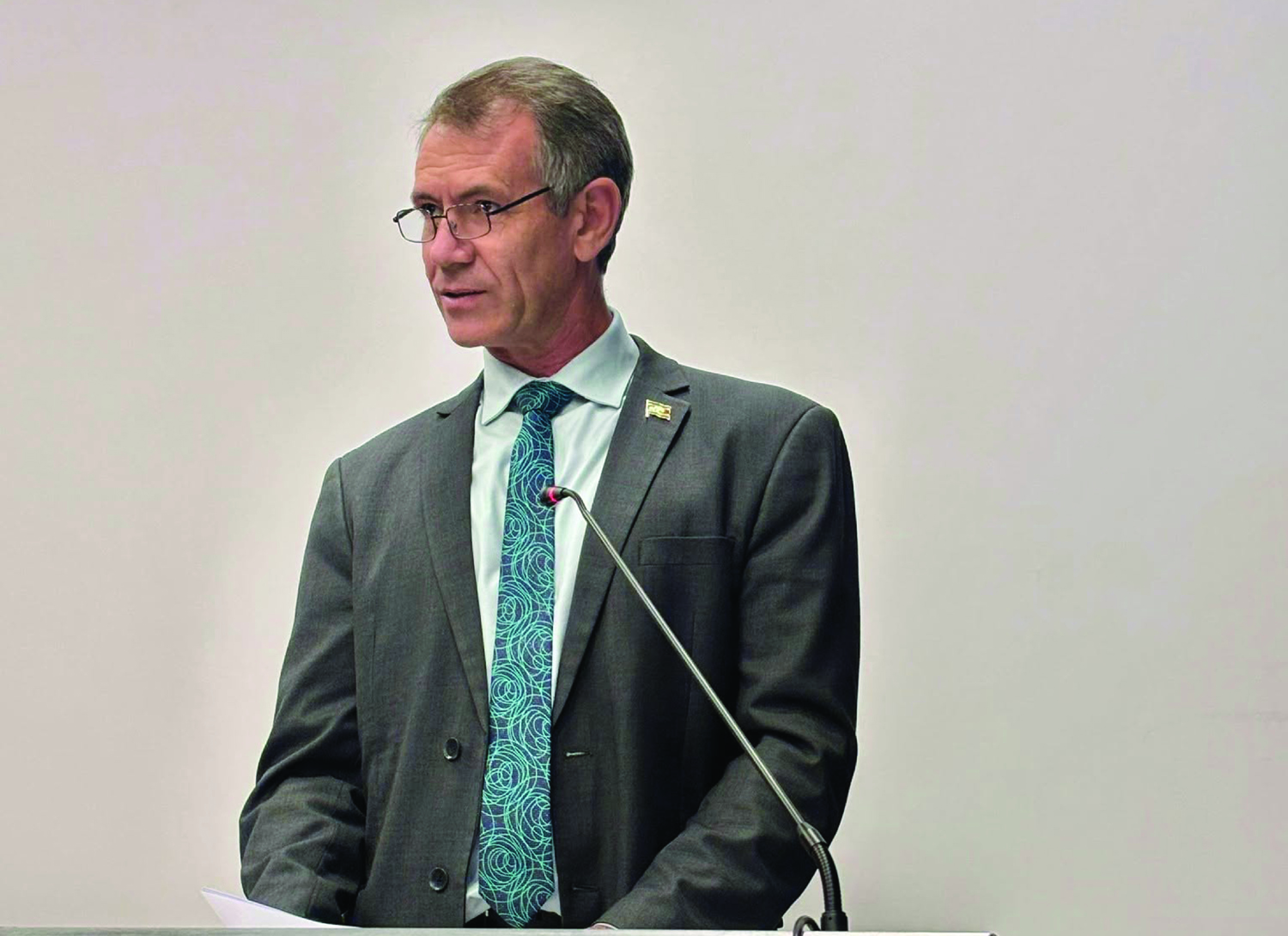
Emaswati’s failure to feel the impact of economic growth is due to excessive borrowing, as many are living beyond their means.
Minister Rijkenberg said although the country’s economic indicators showed signs of progress, individuals were increasingly taking on debt, leaving them with little disposable income to enjoy the benefits of improved economic conditions.
He was responding to concerns raised by Eswatini Observer reporter Sibusiso Dlamini who had questions on government seeking out loans to support more than infrastructure lending.
Dlamini questioned government’s borrowing patterns, particularly the reliance on loans for budget support rather than infrastructure projects capable of generating economic returns. He also raised concerns about outstanding loans, including three facilities secured in the previous year, and questioned when these would be settled.
In response, Rijkenberg said citizens needed to assess how their personal circumstances had changed over the past five years, arguing that many had acquired more possessions but were struggling financially because of their borrowing habits.
He explained that salary adjustments, including cost of living adjustments (COLAs), did not necessarily translate into improved living standards because some of the additional income was absorbed by loan repayments.
The minister said increased earnings often encouraged people to take on more debt, creating a cycle in which they ended up committing much of their income to servicing loans rather than meeting other needs.
He maintained that the situation made it difficult for citizens to feel the benefits of economic progress, even when the country’s economic circumstances were improving.
“Most of us are living beyond our means. We take on too much,” he said. Rijkenberg, however, acknowledged that while the country’s economic growth is at 5% and was doing reasonably well, it had not yet reached its desired level of economic development. Meanwhile, Eswatini TV’s Lington Gule asked the minister if he was not worried that the country could be headed for doom with the many loans it sought.
Gule made an instance with Zambia where three consecutive ministers of finance kept borrowing money while singing the same tune that Rijkenberg sang of the country’s financial standing being fine.
In response, the minister defended the use of loans, arguing that borrowing was not necessarily harmful if the money was invested in viable projects supported by sound business cases and capable of generating returns.
Government considered a debt level of about 45% of gross domestic product (GDP) manageable and conservative for the kingdom, while debt levels exceeding 60% could expose countries to significant financial risks, including default. He said Zambia’s debt had risen to approximately 100% of GDP, as an example of the dangers of excessive borrowing.
Although the global average debt level stood at about 66% of GDP, Rijkenberg said Eswatini should maintain a more conservative threshold of 45%.
He argued that taking calculated financial risks through properly assessed investments could stimulate economic activity and create thousands of jobs. The minister maintained that the key consideration was whether borrowed funds were channelled towards projects with clear business cases and the capacity to deliver economic benefits.