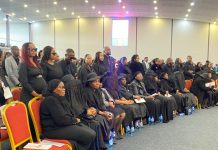

The “Dry-Cleaning” Services at Funerals
In recent times, funerals have increasingly become venues for sanitised remembrance, where the deceased’s flaws are often glossed over.
This phenomenon, which I refer to as “dry-cleaning” services, raises important questions about the integrity of our tributes.
At a funeral I attended in KwaNdebele, a young man poignantly remarked: “Truly, people can change. This young lady lying here is proof that people can change because today is the first time she’s sleeping alone.”
This statement starkly illustrates the irony of how we remember individuals, even when their lives were fraught with challenges.
Funerals should not serve as platforms for rewriting history. Instead, they should honour the truth of a person’s life.
The Legacy of Truth in Remembrance
When my time comes, I implore those who gather to remember me to speak candidly about my life.
I want to be remembered as someone who, like Nelson Mandela, faced the complexities of relationships, having been married three times, with each chapter contributing to my journey.
Let us not shy away from the truth, for it is in honesty that we find the most profound connections to those we have lost.
This is not a justification, but a mere reminder that Nelson Mandela was married to Evelyn Ntoko Mase, his first wife, in 1944. They divorced in 1958.
He then married Nomzamo Winifred “Winnie” Madikizela, his second wife, in 1958. They divorced in 1996.
He finally settled down with Graça Machel, whom he married on his 80th birthday in 1998. She remained married to him until his death in 2013.
We normally celebrate the greatness of Mandela as a freedom fighter, South Africa’s first democratically elected president and an international icon.
However, when those sitting on the judgement seat deliver a verdict concerning his life, they judge him in the same way they would judge a pastor or Christian who had made similar mistakes.
Death as an Opportunity for Power
Another concern I have is the opportunistic nature that often accompanies death.
Many individuals, akin to the prodigal son, seek their inheritance before the rightful time, eager to seize positions of power rather than honouring the departed.
The story of Joshua from the Bible serves as a reminder of true servitude.
He was not concerned with ambition. He supported Moses and awaited God’s command before stepping into leadership.
Today, however, as leaders age, there is often a rush to claim their roles, overshadowing the respect due to their service.
The Importance of Patience and Service
The biblical narrative emphasises that leadership is not a race.
When Moses died, it was only after divine instruction that Joshua led the Israelites.
This serves as a critical lesson in patience and respect for the established order.
We must learn to support our leaders, believing in the timing of our own call to lead.
The Parable of the Pit
Let me conclude with a parable.
A man fell into a deep pit and was unable to escape. As he cried for help, passersby offered notes of assistance for when he would eventually be free, but none offered immediate help.
Finally, one brave soul jumped into the pit with him.
“Now we’re both stuck!” the man exclaimed.
“Don’t worry,” the rescuer replied. “I’ve been here before and I know the way out.”
This story embodies the essence of community and support.
In times of despair, we must remember that those who have faced similar struggles can guide us to freedom.
In conclusion, let us honour the lives of those who have passed with authenticity, patience and a commitment to serve, rather than seeking to seize power.
Death is not the end, but a reminder to live truthfully and support one another through life’s challenges.