



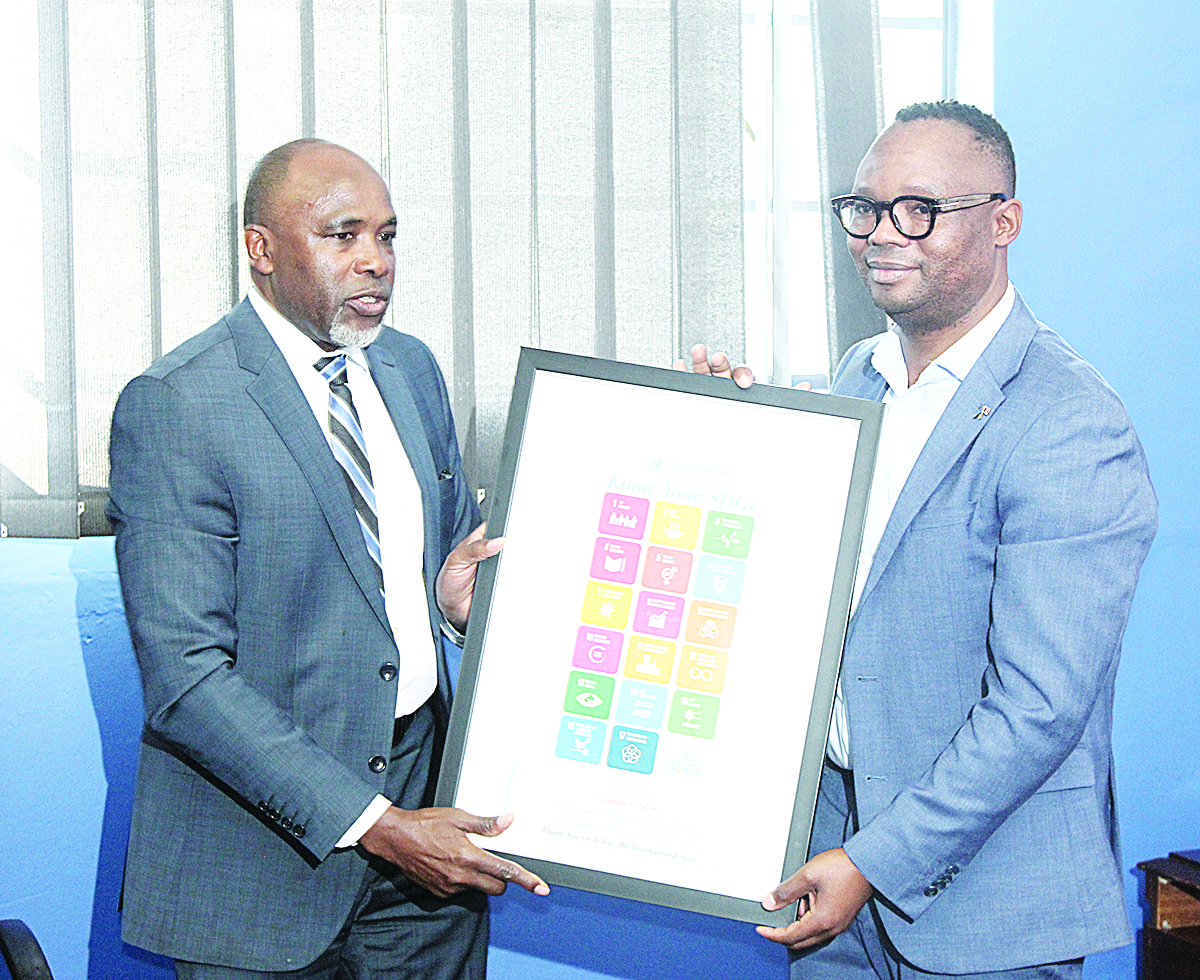
THE United Nations Resident Coordinator George Wachira admired His Majesty King Mswati III for repeatedly speaking about the reform of the UN.
This was shared by Wachira yesterday when he visited the Eswatini Observer offices at Sidvwashini with a team from the UN. The visit was aimed at engaging with the media in accelerating the implementation of sustainable development goals (SDGs).
Wachira said he admired the efforts made, including by His Majesty King Mswati III when he takes to the podium in international forums or through his representatives.
He said the king has spoken repeatedly on two things, one being the reform of the United Nations, as it has been eloquently said.
Wachira said he was delighted when he arrived in the country to learn about the Ezulwini Consensus. He said this was the home, the place that gave the earliest expression on the need to reform the UN.
“It started with the Security Council in 2005, here in Eswatini. It has taken us 20 years to come back to the conversation, but now there is momentum,” he said.
He added that from 2018 to 2019, there have been changes also at country level, noting that there were 21 agencies focused on implementing the new cooperation framework in Eswatini.
Meanwhile, Wachira said in 2015, the world set itself an agenda called Agenda 2030. He said it was now 2026 and countries had four and a half years to go before the end of Agenda 2030.
He therefore stated that looking back at the progress made in the past 10 years and the remaining five years, government and everyone else would be talking about the need to accelerate progress towards the sustainable development goals.
He said having conversations with the media would help them understand the context of implementing SDGs. Wachira said there was a need for stakeholders to understand what was meant by the six transitions as investment pathways to accelerate SDGs.
Adding, Wachira said the media needed to know what needed to be done, stating that what was sad was that the world had collectively attained only 17% of the SDGs, adding that there were good and bad reasons for this.
“We recently launched the United Nations Sustainable Development Cooperation Framework (UNSDCF) 2026–2030, which is our common document as a UN country team together with the Government of Eswatini, to forge forward the implementation of the SDGs. It covers the last five years of Agenda 2030,” he said.
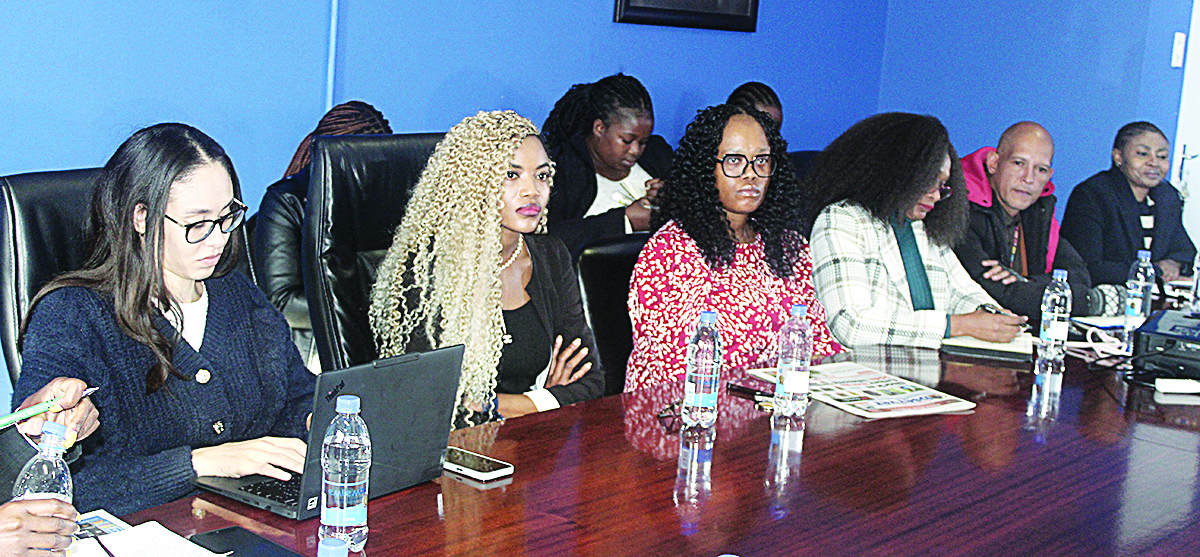
He added that Eswatini Observer Managing Editor Mbongeni Mbingo, in his capacity as the Chairman of the Editors Forum, sits on the Joint National Steering Committee, which is the body that oversees the implementation of the cooperation framework.
Wachira said they wanted to start on the right footing in terms of engaging with the media going forward.
‘Journalists write better when informed’
ESWATINI Observer Managing Editor Mbongeni Mbingo says journalists write better when they are well informed.
This was shared by the ME yesterday during the visit by UN officials for an engagement on accelerating the implementation of the SDGs at the Eswatini Observer offices.
Mbingo said they were not foretelling information, but had to talk to people and understand the perspectives of the various sources of information.
He urged the UN not to give up on the media because it was dealing with a lot.

“The country may look small but it is big. There are so many stories that can be told to impact the lives of Emaswati. One journalist in this newsroom writes four stories a day and that can be a lot looking at the indicators of what a story is,” he said.
He said there was more that goes into a story, stating that the industry was moving at a fast pace.
Eswatini Observer Editor Nomthandazo Nkambule said they were grateful for the engagement and for the UN having brought their team.
She said there could be no development without the media. She said she strongly believes that constructive engagement with the media would help in achieving the pursuit of development.