


Right of reply: Parliament involved in politics of self
So, obviously, I enjoy a good debate. I enjoy dialogue and I always look forward to the feedback because we all have opinions, sometimes very strong ones, about what is happening around us.
That, for me, is at the heart of why I love writing. I give a great deal of myself to this column and I take responsibility for the opinions I express here. To me, that is a sacrosanct rule of writing for the public.
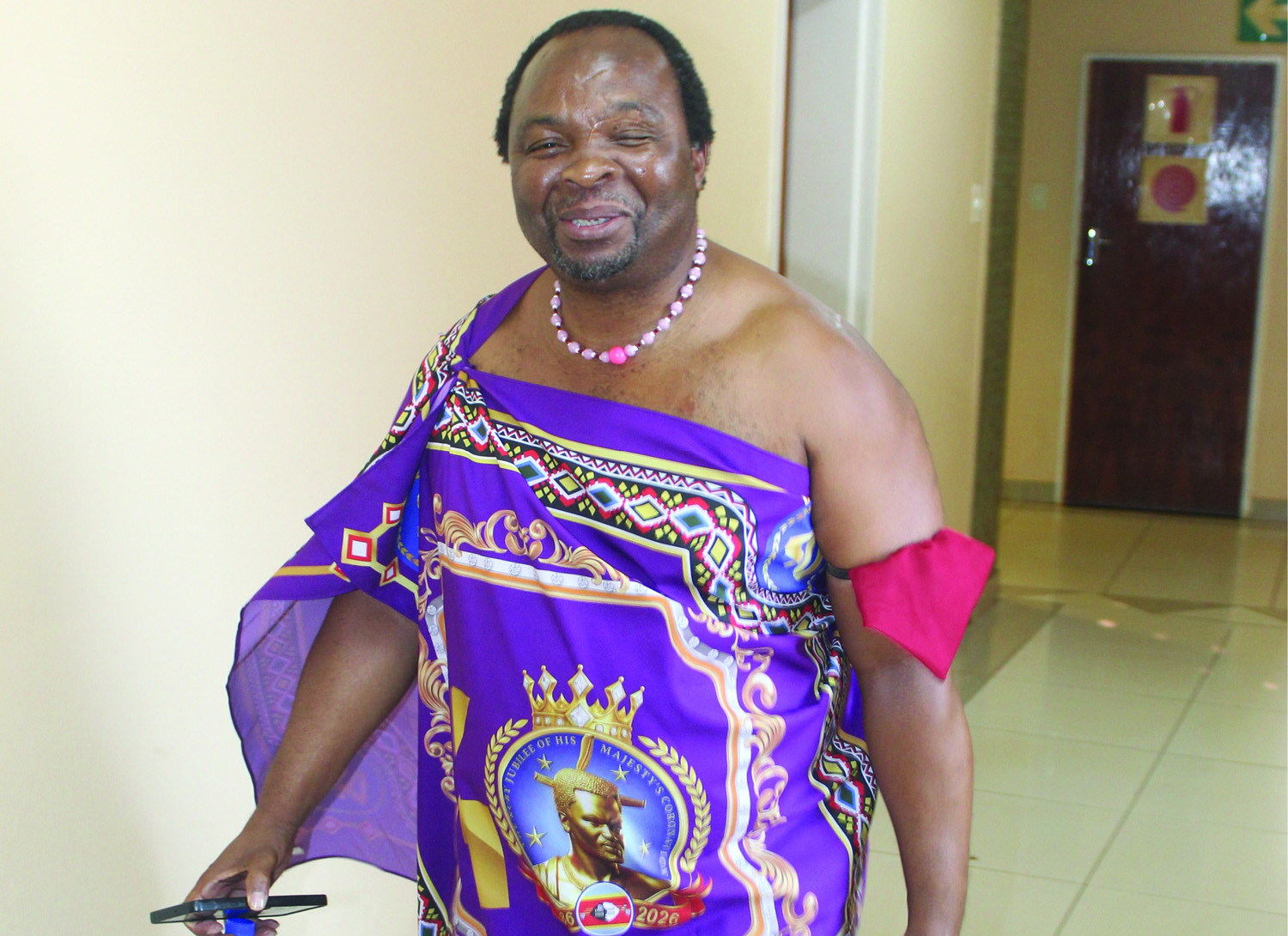
The events of this past week are an example of what I live for. My former newsroom colleague, MP Welcome Dlamini, reached out to share his views on last week’s column. I welcomed his feedback and encouraged him to write a response. He seemed half-convinced-half-expected me to be reluctant to take criticism (and after all those years we shared a newsroom, I’m sure he knows me better than that!).
Our usual practice would have been to publish his response on this very page today. I opted to run it in Tuesday’s edition because I didn’t want to give the impression that I was reluctant to make room for criticism of my own piece. It was all in the interest of a good conversation.
An exchange of ideas does us and our country, some good.
I’ve had quite a lot of feedback on both my column and the MP’s response. It’s humbling and energising to see readers engage with an important issue, keep a clear head and give others room to hold a different view. Today, we’re publishing a response from another former colleague and editor of mine, Bheki Makhubu. I couldn’t be more honoured that last week’s column has prompted this kind of debate and that he has also been prompted to weigh in.
I’ve decided to shelve my own response for now (after all, the page can only take so many words!).
The question at the heart of this debate is worth staying with. What do we expect of the people we entrust with decisions that affect our lives and shape the course of our country – or better yet, what do they actually even think of their own role?
So, enjoy the read and let’s keep the conversation going.
The response by Mbabane East Member of Parliament, Welcome Dlamini, to criticism by Mbongeni Mbingo’s last week’s opinion piece about the selfish workings of parliamentarians raises important issues about the country’s political system that require a wholesome discussion about the country’s state of affairs.
MP Welcome accuses Mbingo of a poor understanding of how Parliament works and warns that this ignorance by a senior journalist will mislead the voting public. MP Welcome goes on to state that, on the contrary, parliamentarians are a very busy people, hard at work every day building the country.
In seeking to make the case for what he considers unfair and ignorant criticism of Parliament, he writes that: “An MP does not personally control government procurement, administer business licences, allocate all public funds, determine lending conditions or independently create employment opportunities.”
The natural response to this statement is to ask the MP who, then, exercises these functions that are so vital to the everyday lives of Emaswati if it is not Parliament? To understand this question, one has to understand the tinkhundla system of government, which MP Welcome serves and has become a strong proponent of.
The tinkhundla system, which was conceived by King Sobhuza II and established in 1978, formed a single system of government that, through Cabinet, Parliament, the Judiciary and the traditional systems of governance, operates like a conveyor belt, each complementing the other.
When King Sobhuza banned political parties, he removed what he considered the disruptive element of politics and introduced tinkhundla as a single political system with various structures of governance that are distinct but interdependent. They are certainly not separate and independent of each other, as MP Welcome seems to suggest.
What this means, therefore, is that MP Welcome can never tell the people of Mbabane East, where he was elected, that the failure of service delivery lies elsewhere and not squarely at his feet. That is not how the tinkhundla system works, my good sir.
For the MP to then argue that it is unfair to hold each parliamentarian responsible for every developmental failure “while ignoring the institutions that possess the actual executive authority and resources to address these challenges,” suggests that, contrary to his claim that Mbingo does not know how Parliament works, it is he who has a poor understanding of the tinkhundla system of governance he serves.
The crux of MP Welcome’s treatise is to take exception to Mbingo’s assertion that MPs are spending public money undertaking endless trips outside the country while Emaswati suffer at home. He objects, in strong terms, to the claim that MPs are neglecting their people and constituencies while they live large.
In essence, what MP Welcome claims in his article is that the service delivery failures that this country is facing should not be attributed to members of parliament because, he says, they are too busy with other things to pay attention to the very reasons they were elected for.
To marshal his point, he writes: “Parliament is not confined to the walls of the House of Assembly. Much of its work takes place outside Parliament, where representatives must engage institutions, communities, stakeholders and other parliaments.”
In 1992, when King Mswati III scrapped the Electoral College system and introduced direct election of House of Assembly representatives by voters, he brought Emaswati onto the conveyor belt that is the tinkhundla system of governance so that ordinary voters could have direct links with their members of Parliament.
Therefore, for MP Welcome to pass the buck by pointing to other structures for government’s failures and seek to absolve MPs of any responsibility for their failure to improve the lives of Emaswati is a deflection of the responsibility to be held accountable. It defeats the very essence of what the tinkhundla system of governance is all about.
In his article, MP Welcome casts parliamentarians as people who have the onerous responsibility to balance the many demands of the electorate who voted them into Parliament. He writes: “An MP may receive conflicting demands from different sections of the same constituency. The responsibility is not merely to repeat what every individual wants but to exercise sound judgment in determining what is in the broader public interest.”
Indeed, my good sir; that is what a good MP should do. But, Mbingo’s article sought to call out the Members of Parliament who are not exercising sound judgment, who are more concerned about their personal interests rather than improve the lives of those who elected them.
It is this claim that the MP said was an unfair accusation based on ignorance of the workings of Parliament. However, MP Welcome cannot refuse to have this claim of poor judgment, or no judgment at all, as made by Mbingo, explored further.
The MP says parliamentary work is much bigger than travel and representation. Nothing could be further from the truth. Here’s why; right now, government has run out of insulin injections for diabetes patients.
During the week, an official from the ministry of health, who refused to be interviewed live on radio, sent a voice note to EBIS last week to say that government had received a questionable consignment of the insulin injections which they could not distribute to public health care facilities.
In this voice note, the official promised that injections would be made available this coming week.
Not a single member of Parliament has said a word on this serious health crisis that is unfolding before us.
Had MPs not been too busy travelling and doing everything else besides taking care of the people who voted for them, they would have appreciated the magnitude of the problem and asked hard questions from the minister of health to get to the bottom of why such important medication is no longer available to Emaswati.
Diabetes is a life threatening disease. A person with heightened levels of blood sugar most certainly cannot wait a week to get treatment. If MP Welcome spent time with the electorate, instead of doing things that he thinks are much bigger than representation, he would have known that a person who needs an injection of insulin cannot wait a week for the ministry of health to get its house in order and do what it was established to do, which is to supply Emaswati with medication. To keep a person waiting for medication is a certain death sentence.
It is, however, no surprise that government, which Parliament is a part, cannot supply insulin injections to diabetic patients. In parliament, MP Welcome challenged Prime Minister, Russell Mmiso Dlamini to explain what the MP described as a disruptive leadership style by the Cabinet leader.
When the matter was finally discussed in Parliament, the vast majority of MPs backed the prime minister’s style and urged him to go on and mess up the tinkhundla system of government.
It is common cause that Prime Minister Russell runs a divided cabinet where he does not get along with the vast majority of his cabinet ministers. His abrasive leadership style has resulted in ministers working in silos, each doing their own thing without any accountability to one another as a collective.
This is against the very essence of the tinkhundla system of governance. As already stated, King Sobhuza banned political parties because he did not want any disruption of efforts to build the country after independence. By establishing tinkhundla, he created a single political system where every state institution would complement the other to make Eswatini a better place.
By backing the disruptive leadership style and praising the Prime Minister, parliamentarians broke ranks with this country’s political system. It is not far-fetched to surmise that this mess works for MPs because it distracts the public from their own failure to deliver for the people who elected them.
MP Welcome holds, as he does, that the failures of government must be attributed to the executive which, he says, has the exclusive power to bring meaningful change in the lives of ordinary Emaswati.
What he does not tell us is how a divided cabinet, under the much-praised disruptive leadership style, can produce any positive results for the public. You cannot field a football team at Msunduza Sports Ground, my good sir and expect it to win a single match when none of the players see eye-to-eye and will never pass the ball to each other.
As things stand we have a crisis with the price of electricity in the country. Eswatini Electricity Company’s tariff estimates in the coming few years tell us that the price of electricity will become unaffordable to ordinary citizens.
In a cohesive cabinet, where there is sound leadership, this matter would have been thoroughly discussed and solutions to this looming crisis explored. That cannot happen in a divided cabinet which parliamentarians have backed and praised.
This kind of behaviour is at the heart of Mbingo’s point, for it calls out parliament’s failure to pay attention to the welfare of Emaswati because MPs are too busy on joyrides around the world doing what MP Welcome described as “meaningful parliamentary oversight”.
The fact that parliamentarians backed this disruptive style of leadership is shameful. The result is that we have a runaway train in electricity tariffs and there is nobody prepared to stop it. Again, MPs have not discussed this matter in any meaningful way.
After all, as MP Welcome states, parliamentarians are busy with “international parliamentary engagements, for instance, (which) expose MPs to legislative innovations, economic policies and governance practices that may be relevant to our national circumstances.”
Perhaps we will have to wait and see how these innovations help the diabetics and keep the lights on in our homes.
In his spirited defence of parliamentarians, MP Welcome does not tell us if, after three years in the House of Assembly, he can face his electorate, who are emaciated by diabetes because there is no insulin injection in the country, a people facing a looming crisis over electricity, and tell them that he sleeps well at night because he has done his duty for this country?