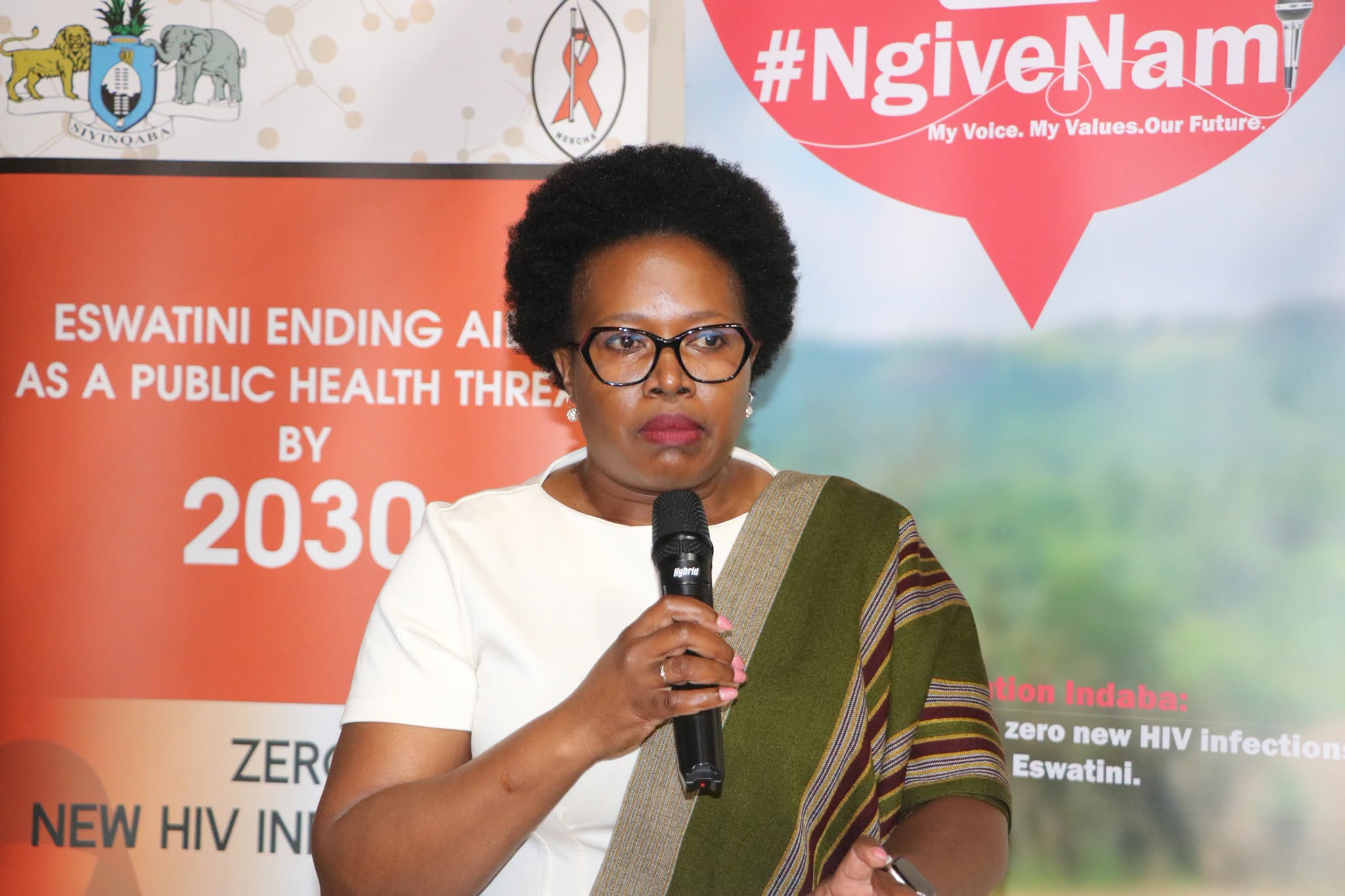
There is a mammoth task sitting on NERCHA’s desk and it is one that Executive Director Dr Nondumiso BQ Ncube and her new executive team should relish with both hands.
At a breakfast meeting with editors on Tuesday, Dr Ncube spoke confidently about the credentials within the new leadership team. Those credentials matter now because the challenge confronting the country is no longer simply about understanding HIV through statistics and studies. It is about turning that knowledge into a campaign capable of reaching a generation that appears to be drifting away from the lessons that helped Eswatini make significant progress in the fight against HIV.
From where NERCHA sits, it has the expertise to do more than tell us what is happening on the ground. It has the capacity to interrogate why it is happening, to bring qualitative research into the picture and most importantly, to translate that knowledge into interventions that resonate with the people most at risk.
That is important because the emerging picture is uncomfortable. New infections and sexually transmitted infections are again a concern, while young people appear increasingly exposed to risky behaviour and less connected to prevention messages. There is also concern about declining condom use. It is the sort of picture that threatens to take the country backwards after years of hard-won progress.
The NED – as the executive head is referred to along the corridors at NERCHA (and I would know this!) – is therefore arming herself and the Council for a fight that requires much more than anecdotal information. But it also requires much more than good research. This new threat to the country’s HIV response demands new thinking, new ideas and perhaps above everything else, a new way of communicating – which is why I argue that their detachment from the media has gotten us here.
That was the tension in the room when editors were presented with NERCHA’s latest study. The information was important, but its packaging felt familiar – almost like a story we have heard before. And therein lies the danger; that a message can be accurate, thoroughly researched and urgently necessary, but still fail if the people it is intended for do not see themselves in it.
NERCHA launched the study through an HIV Indaba last month, warning that young people are increasingly at risk and that indicators associated with HIV transmission are moving in the wrong direction. The findings suggest that some young people remain in the dark about prevention and continue to take risks we might have assumed the country had long moved beyond.
This is precisely why the response cannot simply be to dust off the old campaign playbook.
I challenged NERCHA on Tuesday that parts of the research could leave it open to accusations of a ‘copy-and-paste’ syndrome, because some of the findings sound remarkably similar to information that has circulated for decades.
I say that meaning well for NERCHA and those behind the study. In fact, it is why I was encouraged when Dr Ncube spoke about strengthening the research component of NERCHA’s work, particularly given the expertise within the new team. But research is only one half of this battle.
No matter how sophisticated the study is, the success or failure of a national campaign will ultimately depend on what the public hears, what it understands and whether the message is powerful enough to change behaviour. NERCHA cannot take for granted how people will receive its information simply because the science behind it is sound.
A campaign must take data and give it a human face. It must find the story inside the statistics. It must understand not only who is at risk, but how those people live, what they consume, whom they listen to, what they aspire to and what language makes them stop and pay attention.
That, for me, is where NERCHA still has work to do.
The emphasis so far appears to be on telling the country what the research has uncovered rather than asking what those findings mean for the next generation of HIV messaging. A national campaign is not merely a presentation of evidence. It is the creation of a narrative that can be sustained long enough and powerfully enough, to achieve results. It must connect where we have come from with where we need to go and show people how we get there.
Those of us who have been around long enough to remember how this country achieved its progress against HIV know the power of a visible, relentless national campaign. That is the power of the media, that has suddenly become irrelevant in today’s fight against HIV, simply to be called in to be presented with a study more than they are central to finding the path to delivering the message.
For me, the next campaign needs that same urgency of the past, but it cannot simply wear the clothes of the previous generation.
It needs a new face and a new kind of energy – qualities Dr Ncube herself appears to have in abundance.
The challenge is whether NERCHA as an institution is prepared to rethink the model. Like many institutions today, it may be tempted to believe that traditional media is no longer fit for purpose. That would be a mistake. The answer is not to choose between traditional media and newer platforms, but to build a campaign capable of moving seamlessly across both, meeting different audiences where they are.
More importantly, NERCHA needs to think harder about who today’s campaign is actually speaking to. The familiar narratives around women in factories, bus conductors and sex workers may still have relevance and they undoubtedly belonged to campaigns that worked for their time.
They gave the country recognisable faces, including Hani Dlamini and others whom people could identify with. But today’s young people inhabit a different world.
They consume information differently. Their aspirations are different. Their relationships, social spaces and influences have changed. The young professional, the university student, the emerging middle class and the digitally connected teenager may not see themselves in the faces, language or lifestyles around which yesterday’s HIV messages were constructed.
That does not make the old research irrelevant. It means the campaign built from today’s research must evolve.
If the data tells us young people have lost touch with the reality of HIV, repeating that finding will not, by itself, bring them back. The data identifies the gap; the campaign must find the bridge.
That is the opportunity now before NERCHA. It has a new leadership team, fresh expertise and evidence of an emerging problem that demands attention. What it needs next is a contemporary national campaign with a face, language and energy that cut across today’s generation – one capable of making HIV prevention relevant again.
Because if the threat has changed, then surely the campaign must change with it.
Ashraff’s day in the sun
Perhaps the story is not that many of the political figureheads who attended Indonesian Consul and businessman Kareem Ashraff’s 72nd birthday celebration felt compelled to explain their presence there.
Perhaps the story is that they felt they had to explain themselves at all.
That they were there should not be weaponised against them. Nor should attending a birthday celebration suddenly require a political explanation, an ideological disclaimer or some carefully constructed justification.
Instead, perhaps we should view it through the prism of the country we actually are – a small, closely knit society in which, one way or another, we are all connected.
There is something unhealthy about a society in which people are comfortable calling each other friends behind closed doors but become nervous about acknowledging those relationships in public. That honestly cannot be who we are.
Kareem Ashraff is, without question, part of the fabric of this society. He is a businessman who employs a significant number of Emaswati and as the finance minister said on the day, he has industrialised this country. He has built relationships across different sections of society and as his birthday celebration demonstrated, his footprint extends beyond business.
We seem increasingly to have created a society in which association itself is treated as evidence of something. That is why what Neal Rijkenberg, Thuli Dladla and Marwick Khumalo did should perhaps be viewed much more simply. They attended someone’s birthday. They celebrated another person. And, in doing so publicly, perhaps they demonstrated something about who we really are as a people – or at least who we ought to be.
We should be able to embrace each other despite whatever political, professional or ideological differences may exist between us. We should be able to acknowledge somebody’s contribution without that acknowledgement being interpreted as an endorsement of everything associated with that person.
There must remain room in our society for simple human relationships. Ashraff had his day in the sun. Those who regard him as a friend, colleague, associate or simply someone worth celebrating were entitled to share that day with him.
They should not have to apologise for it or indeed, explain themselves for it.
Because the day we become more comfortable being friends behind closed doors than being seen together in public is the day we should begin worrying – not about who attended whose birthday, but about what fear and suspicion have done to us as a people.