



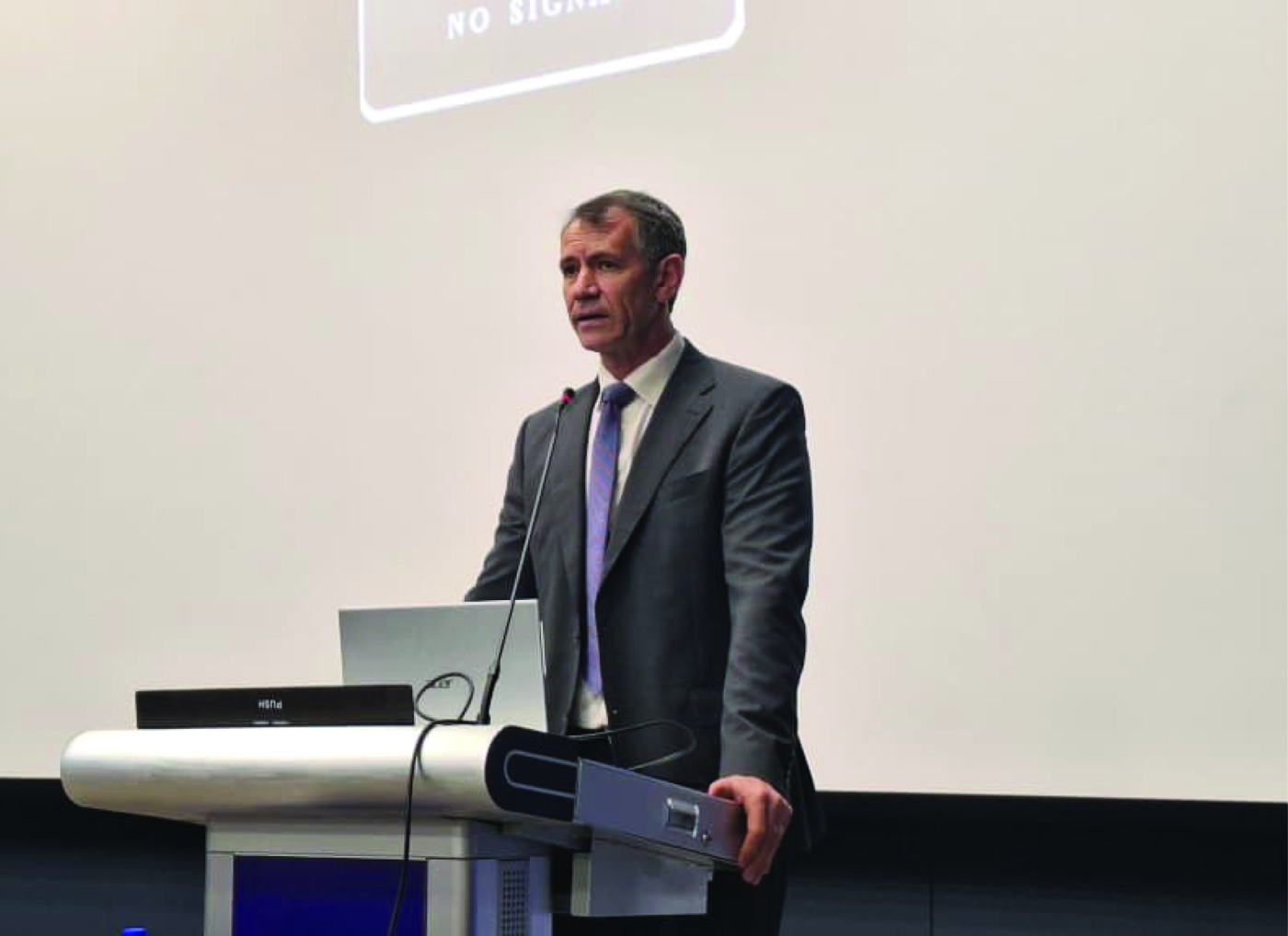
Government has effectively conceded that the Eswatini Revenue Service’s (ERS) ambitious target of collecting almost E18 billion in domestic taxes this financial year is now unlikely to be achieved, with Minister of Finance Neal Rijkenberg telling Members of Parliament that only ‘God’s grace’ could see the Brightwell Nkambule-led institution reach the target.
Rijkenberg made the admission this week while appearing before the House of Assembly’s Finance Committee chaired by Lobamba Lomdzala MP Marwick Khumalo, where legislators were scrutinising tax-related amendment Bills.
Responding to questions about proposed amendments to the Eswatini Revenue Service Act, the minister disclosed that government had deliberately set an exceptionally ambitious collection target for ERS, but said changing global economic conditions, particularly the conflict involving Iran, Israel and the United States had dramatically altered the outlook.
“As I sit here, especially with what’s happening in Iran, the target is unattainable. I can even say publicly, ERS reaching the target this year, we’ve stretched too far,” Rijkenberg told MPs.
“But who knows, maybe by God’s grace they get it,” he added, in remarks representing one of government’s clearest acknowledgements yet that the domestic revenue assumptions underpinning the current fiscal year have become increasingly difficult to realise.
The minister’s comments came as he defended proposed amendments that would fundamentally change how ERS finances its own operations.
Under the proposal, instead of relying solely on periodic Treasury allocations that are sometimes delayed because of government’s cashflow constraints, ERS would receive an agreed portion of its operational funding directly from tax collections before remitting the balance to government.
Rijkenberg argued that delayed funding was beginning to undermine the very institution responsible for generating government revenue.
“If our cashflow challenges mean ERS can’t deliver their mandate, our collections go down,” he said.
He likened the proposal to the biblical principle of not starving the animal responsible for producing food.
“You mustn’t muzzle the ox while it is threshing the wheat. If we muzzle the ox, you find there is no wheat for anybody,” he told MPs.
He explained that tax authorities internationally generally operate around what he described as a four per cent cost-of-collection benchmark, arguing that starving revenue authorities of operational funding ultimately reduces overall tax collections.
Several MPs questioned whether allowing ERS to deduct its operational allocation directly from tax revenue before remitting funds to Treasury could create opportunities for abuse.
Mbabane East MP Welcome Dlamini asked whether legislation should prescribe a fixed percentage rather than leaving room for future governments to alter the amount.
Mhlambanyatsi MP Dr Bonginkhosi Dlamini questioned what safeguards would prevent ERS from taking more than necessary before remitting revenue.
Rijkenberg insisted that linking ERS funding to collections would strengthen, rather than weaken, accountability.
“If they collect less, they get less. If they collect more, they get more. It’s aligned with interests,” he explained.
He said government would continue setting annual collection targets and that existing performance bonus arrangements would remain, but acknowledged that this year’s target had already been stretched beyond realistic expectations.
Rijkenberg also painted a bleak picture of government’s immediate financial position.
He told MPs that despite Parliament approving supplementary expenditure earlier this year, Treasury still lacked sufficient cash to finance several major infrastructure commitments.
“We are constantly doing our best. The money will start being raised in about a month’s time and probably only by November will we have raised the final amount of budget support that we need,” he stated.
He warned MPs to expect significant requests for additional budget support later this year, saying the funds would primarily finance infrastructure projects including the Strategic Oil Reserve, the International Convention Centre and road construction rather than recurrent expenditure such as salaries.
“It’s going to be tight until October or November,” he stated.
The minister’s remarks on the tax issue come barely weeks after independent economist Thembinkhosi Dube warned that government’s nearly E18 billion domestic revenue target risked colliding with worsening economic conditions.
Dube argued that rising unemployment, weak household spending, declining purchasing power and increasing financial pressure on businesses were likely to suppress tax collections.
He further cautioned that aggressive revenue collection during an economic slowdown risked driving more businesses into informality, ultimately undermining the very tax base government hopes to expand.
ERS collected E15.72 billion during the 2025/26 financial year.