The country has called on the African Union (AU) to act on early warnings of conflict before violence erupts, saying the gap between knowing and acting is costing lives.
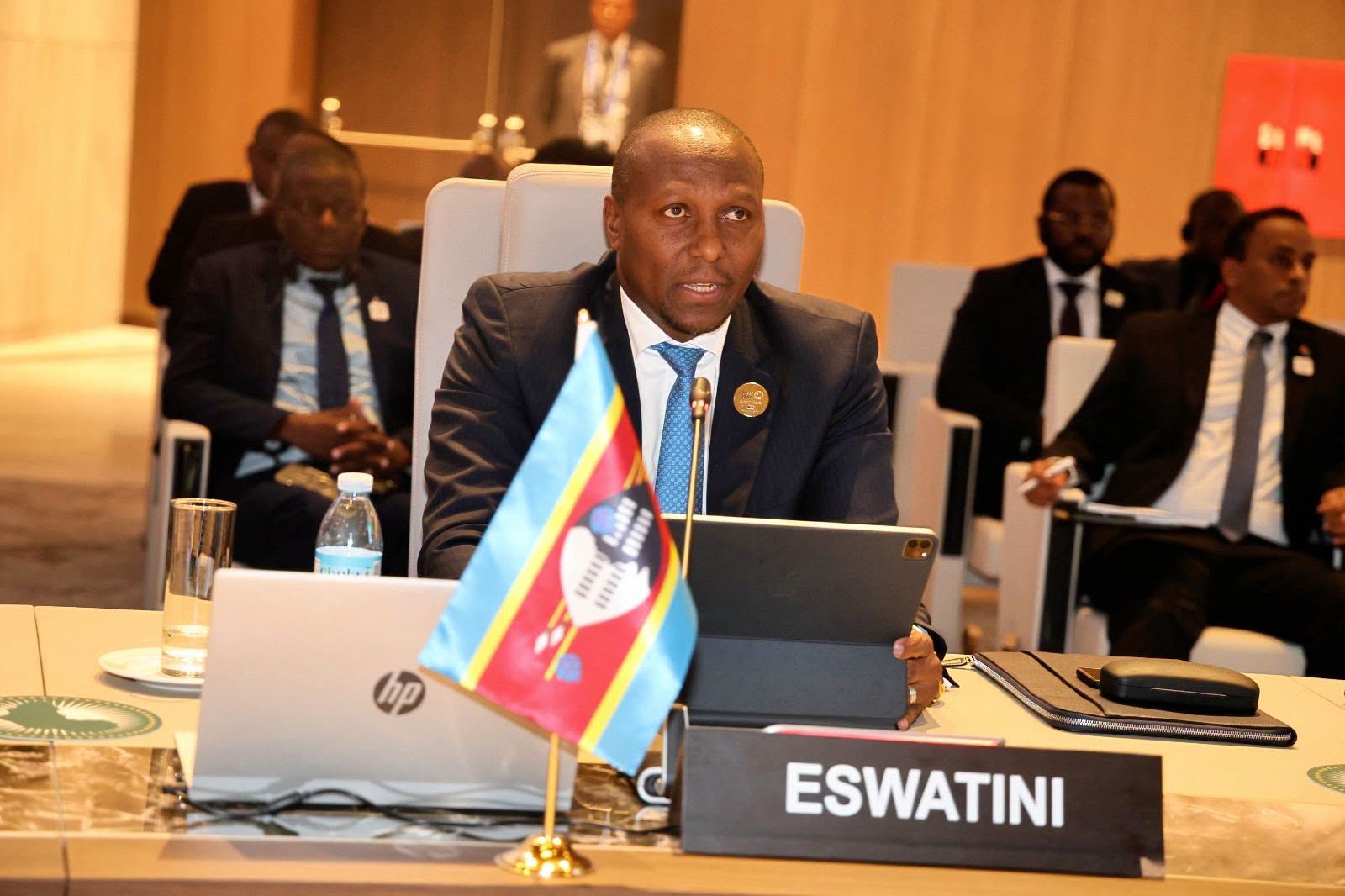
Prime Minister (PM) Russell Mmiso Dlamini made the call while making remarks on behalf of His Majesty King Mswati III at the 21st Extraordinary Session of the Assembly of the African Union on Strengthening Mechanisms for Conflict Prevention and Resolution in Africa in Luanda, Angola, on Sunday.
It was stated that the continent did not lack information about potential conflicts, but needed to close the gap between identifying warning signs and taking action.
“Time and again, warning signs of conflict have long shown themselves before the violence did and a moment when dialogue was still possible,” he said.
He said the issue that needed to be addressed was not a shortage of information, but the distance between knowing and acting.
“That distance is where people die,” he said.
The PM said peace was a condition for achieving the ambitions that the AU had set for itself.
He said conflicts often started long before armed forces crossed borders, with ideological differences aggravated by intolerance and disputes over access to water, grazing land and other increasingly scarce resources.
He said climate stress and migration should therefore be regarded as potential precursors to instability and conflict.
“Their consequences call for timely, lawful and coordinated action,” he said.
It was added that effective prevention required appropriate cross-border arrangements for the equitable management of shared water and grazing resources.
He also called for lawful and orderly channels for migration and coordinated land-use planning.
Such measures would uphold sovereignty, promote peaceful coexistence and provide a practical and cost-effective way of preventing disputes from escalating into conflict.
“The soundest investment in peace is the lawful prevention of conflict before it arises,” he said.
The remarks also identified what he described in his intervention as deeper obstacles to lasting peace.
He said peace remained elusive because of the pursuit of power, reluctance to confront allies who acted unjustly, lack of impartiality, impatience and harmful interference from beyond Africa’s borders.
He said legal and diplomatic actors needed to respond to these challenges through open dialogue, mutual respect and inclusive cooperation, guided by justice, equity and mutual understanding.
Concern over unconstitutional changes of government on the continent was also raised. He said such changes had occurred too often to be regarded as exceptions.
Dlamini referred to Article 30 of the AU Constitutive Act, which provides that governments that come to power through unconstitutional means shall not participate in the activities of the Union.
He said the instrument itself was not the problem, but rather the consistency with which it was applied.
“Eswatini’s position is simple: this Union must apply its own rules without exception,” he said.
He called for governments that come to power unconstitutionally to be suspended without delay and for credible timelines to be set for a return to civilian rule.
He said failure to respond to unconstitutional changes of government could encourage further coups.
Dlamini said the country was well placed to contribute to conflict prevention through its regional and continental roles.
The country currently chairs the Southern African Development Community (SADC) Organ on Politics, Defence and Security Cooperation and is a member of the AU Peace and Security Council.
He said the country’s early warning systems produced good analysis but did not always result in early action.
“Our early warning systems produce good analysis. What they do not reliably produce is early action, because Addis Ababa and our regions too often reach the same conclusion days or weeks apart,” he said.
He proposed six measures for consideration by the summit.
First, he called for dialogue to be treated as a mechanism in its own right rather than something introduced after violence had already started.
Second, he called for the AU Early Warning System to be strengthened through an automatic council session within days of every warning it issued.
Third, he called for the Panel of the Wise to be restored to a standing mandate to engage early in conflicts.
He also called for women and the youth to be fully involved in mediation efforts.
Fourth, there was a call for the African Standby Force to be adequately resourced.
Fifth, he called for greater funding for conflict prevention, including the adoption of the billion-dollar Peace Fund.
Sixth, he called for greater recognition of regional mechanisms, including SADC, the Economic Community of West African States (ECOWAS) and the Intergovernmental Authority on Development (IGAD). He said the regional mechanisms were the AU summit’s ‘closest ears’ and that harmonising the continental and regional architecture was important in turning early warnings into timely action.
King urges closer coordination on conflict prevention
His Majesty King Mswati III has called for stronger coordination between the African Union (AU), Southern African Development Community (SADC), United Nations (UN) and other stakeholders to improve conflict prevention and resolution in Africa.
The message was conveyed by Prime Minister (PM) Russell Mmiso Dlamini during a courtesy call on AU Commission Chairperson Mahmoud Ali Youssouf on the margins of the 21st Extraordinary Session of the Assembly of the AU on Conflict Prevention and Resolution in Africa in Luanda, Angola, on Sunday.
Dlamini conveyed a message of solidarity from His Majesty, reaffirming the country’s commitment to supporting the AU’s efforts towards the peaceful prevention and resolution of conflicts across the continent. The country’s readiness to work closely with the AU was also underscored in advancing efforts aimed at maintaining peace and stability in Africa.
In his message, the king called for enhanced cooperation and coordination among the AU, SADC, the UN and other relevant stakeholders. His Majesty said such cooperation was necessary to promote coherent and effective approaches to conflict prevention, management and resolution.
Youssouf expressed his appreciation for the message of solidarity and paid tribute to the king for his leadership and continued commitment to peace and stability on the continent. He commended the kingdom for its contribution to the promotion of peace and stability and welcomed its readiness to strengthen cooperation with the AU.
He then assured the PM that the proposals conveyed by His Majesty would receive due consideration, noting that they were fully consistent with and complementary to the mandate and objectives of the AU. He further expressed appreciation for the important role played by SADC in advancing regional development, peace, security and preventive diplomacy.