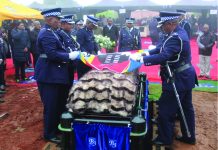

As another family mourns the loss of a loved one who died outside the country, attention has once again turned to a recurring question that has surfaced time and again in the country as to who should bear the cost of bringing local citizens home when they die abroad.
While government currently has no dedicated repatriation assistance fund, Minister of Finance Neal Rijkenberg says such a fund can only be established following a request and motivation from the relevant ministries before being considered through government processes and Parliament.
For years, grieving families have been forced to appeal to members of the public for financial assistance after being confronted with the often prohibitive cost of repatriating the remains of relatives who die in foreign countries.
While communities have repeatedly responded with generosity, the growing number of public fundraising campaigns has raised concerns over whether the country has a sustainable long-term solution for such situations.
The latest appeal, following the death of a Liswati in India this week, has once again highlighted what many describe as a policy gap. Beyond the grief of losing a loved one, families often find themselves racing against time to raise hundreds of thousands of Emalangeni needed to transport a body back home.
Earlier this year, the nation rallied behind the families of teachers Delisa Dlamini and Cinisile Nhlengetfwa, who died in Taiwan. Public appeals were launched to help cover the substantial costs associated with repatriating their remains after the families were unable to meet the expenses on their own.
Those cases, like others before them, sparked widespread debate over whether the responsibility should continue to rest almost entirely on bereaved families and members of the public or whether government should establish a mechanism to provide assistance in exceptional circumstances.
The question has become even more pertinent as increasing numbers of Emaswati travel abroad for studies, employment, business opportunities and cultural exchange programmes. Others leave the country under government scholarship programmes or through bilateral cooperation agreements with foreign governments.
While many successfully complete their studies or employment contracts and return home safely, some unfortunately die while abroad, leaving families to grapple not only with the pain of loss but also with overwhelming financial obligations.
The repatriation of human remains is a complex and expensive process. It involves obtaining death certificates and other legal documentation from foreign authorities, embalming in accordance with international health regulations, securing consular clearances, purchasing specialised caskets approved for international transportation, airline cargo charges and various administrative fees before the deceased can finally be returned home for burial.
In many instances, the total cost is well beyond the reach of ordinary families.
The repeated fundraising drives have prompted questions about what role the Ministry of Foreign Affairs and International Cooperation plays when a Liswati dies outside the country.
Ministry of Foreign Affairs and International Cooperation Communications Officer Sikhumbuzo Bhembe said the ministry worked with affected families following such incidents, although he did not elaborate on the nature of the assistance. He said families usually engage the ministry after the death of a loved one abroad and the ministry assists.
Minister Rijkenberg said the establishment of such a fund would not fall solely under the Ministry of Finance, but would first require a request from the ministries responsible for government-sponsored programmes.
MP calls for repatriation fund
Matsanjeni South Member of Parliament (MP) Sabelo Ndlangamandla has called on government to explain what assistance is available to locals who die abroad. He said the growing number of deaths in foreign countries has become a source of concern.
Contributing to the debate on the Prime Minister’s Office’s first quarter report in Parliament, Ndlangamandla said the deaths of students and other locals overseas appeared to be increasing, leaving bereaved families to shoulder the financial burden of repatriating the remains of their loved ones.
He questioned what the Ministry of Foreign Affairs and International Cooperation, together with Eswatini’s embassies and diplomatic missions, was doing to assist affected families.
Ndlangamandla said it was disheartening that families were repeatedly forced to appeal to members of the public for donations to bring the remains of their relatives home. He urged government to consider putting in place a sustainable mechanism for this purpose.