



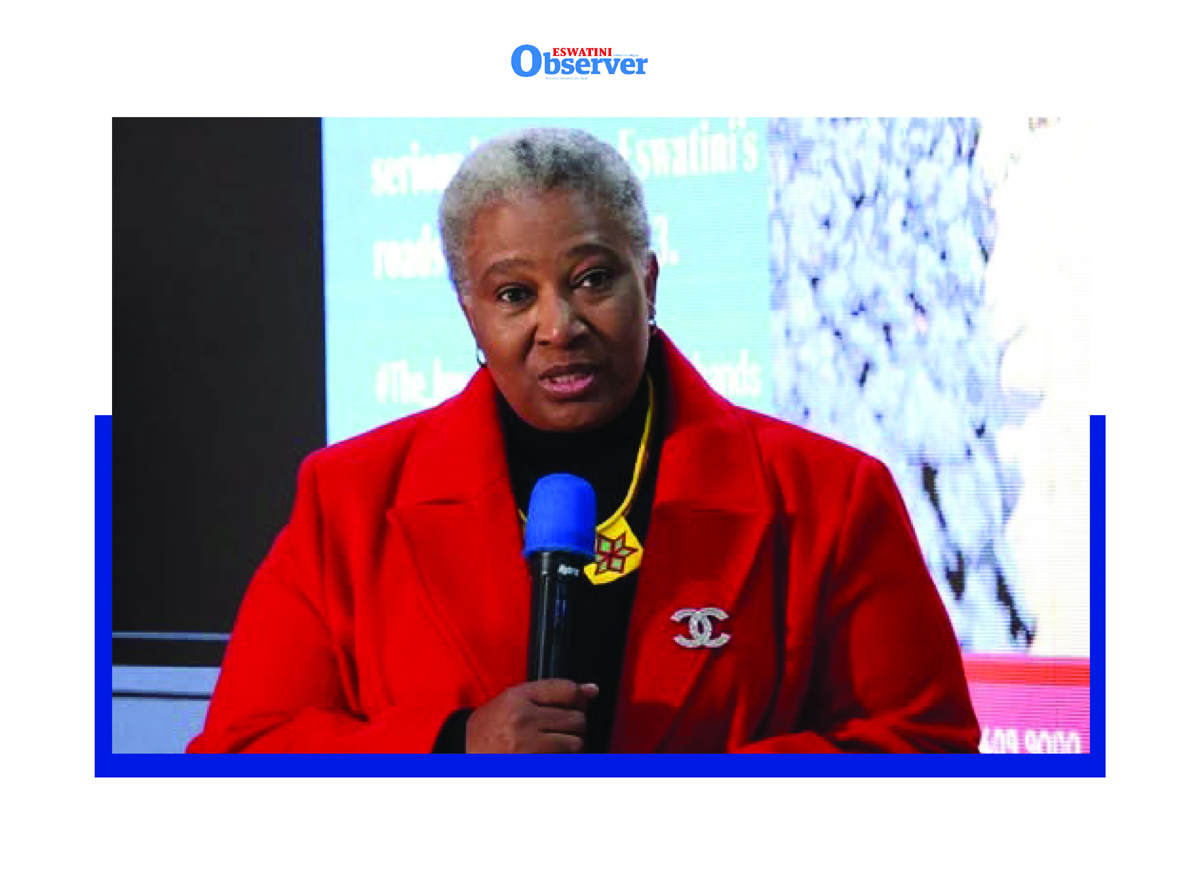
The Eswatini Road Safety Council, together with the office of the attorney general (AG), is set to review drink-driving fines following recent court rulings that have reduced penalties for offenders.
This was revealed yesterday by Fortunate Shabalala, who explained that the fines currently being imposed were not uniform as they were based on different sections of the Road Traffic Act of 2007.
She said the council was preparing to engage the Office of the Attorney General to find a way forward, although the meeting had been delayed due to the tabling of various ministries’ 2025/26 performance reports.
“We will be working on reviewing the fines and engaging with the office of the attorney general to come up with a way forward,” said Shabalala.
The move comes after a High Court judgment delivered by Bongani Dlamini, which clarified how the law should be interpreted when sentencing drink-driving offenders.
The ruling is now binding on lower courts, meaning magistrates across the country must follow the same approach when handing down penalties.
Since the judgment, Magistrate’s Courts have been issuing significantly lower fines, ranging between E500 and E800. This marks a contrast to previous penalties, which could go as high as E5 000 depending on how cases were charged and the level of the presiding judicial officer.
Shabalala had earlier expressed concern over the development, describing it as a major setback in the fight against road accidents, particularly those linked to alcohol abuse.
She argued that instead of being the maximum penalty, the E800 fine should serve as the minimum amount paid by offenders.
“The reduced fines send the wrong message to motorists. It may suggest that drink-driving carries minimal consequences, which is dangerous,” she said.
The council has long maintained that strict penalties are necessary to deter reckless behaviour on the roads.
According to Shabalala, the country records more than 200 fatal road accidents every year, with over a thousand people sustaining serious injuries. Many of these incidents are linked to alcohol consumption.
She further highlighted the financial burden placed on the state as a result of such accidents.
Government often has to step in to support families who lose breadwinners or to cover medical expenses for those seriously injured.
Before the High Court ruling, sentencing for drink-driving offences varied widely across the magistracy.
In many cases, offenders were fined between E2 500 and E5 000, particularly when cases were handled by principal magistrates who have the authority to impose higher penalties.
However, ordinary magistrates were limited by law to fines of up to E2 000, resulting in inconsistencies.
In some instances, cases involving higher alcohol levels were deliberately structured to appear before principal magistrates, ensuring stiffer punishment.