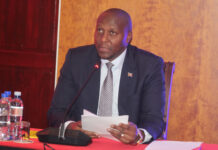




Part of the E11.7 billion 2026/27 revenue expected from the Southern African Customs Union (SACU) will be used to settle the outstanding 85% of civil servants’ salary adjustments.
Minister of Finance Neal Rijkenberg said for the second quarter, the country will receive E2.9 billion and about E850 million will be used to settle the 85% balance of the salary review for civil servants.
The SACU receipts play a huge role in ensuring that government’s cash flow continues its operations effectively. Economist Sanele Sibiya backtracked Minister of Finance Neal Rijkenberg’s sentiments over the past week, where he said the country probably over-promised, hence the need to use this money.
He said normally SACU receipts are used as a critical instrument of government income, to pay salaries of civil servants and the running of government business.
He added that government might need one or two budget support loans which is not a good thing because it has no returns. Instead, he suggested that government seeks loans that would unlock the productive capacity in the economy, approach the private sector for capacity and be able to repay the loan.
He said at some point if the country does not change the fundamentals of the economy, it would literally hit rock bottom. He said if this amount was taken to pay off last year’s debt, going forward there will be pressures on government finances and how programmes were funded.
Sibiya clarified that SACU receipts make over 30% of government’s budget which is a huge chunk to ensure that government stays afloat to run day-to-day business.
He noted the decline in the SACU contribution into government fiscus, however he said the revenue still played a critical role in the debt-to-GDP (gross domestic product) ratio which turns to move with the SACU revenue.
In July when the revenue comes in, he said it was expected that the debt-to-GDP ratio would decline as well, offsetting government obligations to the Central Bank of Eswatini (CBE). He further explained that immediately after, the numbers are expected to pivot back to the initial level which he said was worrying.
ALSO READ | Minister Neal confirms civil servants’ July E850m payout
“This is worrying because if you have this trench coming in and you take about E850 million into back pay, how are we then expected to move on to support government and keep its business moving on for the next three months until the next trench?
This somehow shows and signals the impact of a burgeoning wage bill on government’s cash flow and on the fiscus because this has taken the wage bill to over 30% of the budget.
This might lead to the minister struggling to balance the books to keep the promise and keep government going with its many obligations,” said Sibiya.
Sibiya noted that government is already starting in a summary of a negative situation in terms of salaries. He said civil servants will be better off, but the fiscal space will not as government is foregoing E850 million that is needed.
He noted that the country was already working with a 3-4% debt deficit as a percentage of the gross domestic product (GDP). He said Eswatini does not have much scope to continue borrowing, instead it should better manage the already available resources.
He further noted that the debt-to-GDP ratio was already around 47%.
If more budget support loans are sought, then the debt-to-GDP ratio will increase to over 50%, which is an unsustainable range. SACU receipts tend to decline for one or two years before an increase for another two years when the adjustments are made in terms of the country’s trade ecosystem.
He said 2027/28 will be a tricky year because it will be the second year of decline. He noted that the wage bill would exceed the 33% equivalent to almost E14 billion, which he said was worrying because the annual expected SACU revenue is less than that.
Sibiya added that some suppliers that will not be paid now will subsidise government which slowed the economy.
“When the minister delivers his budget, we project GDP growth based on how government will pay the suppliers. What is happening shows that the targets were not well projected and the economic agents now have to re-evaluate their expectations of how the economy will grow,” further stated Sibiya.