


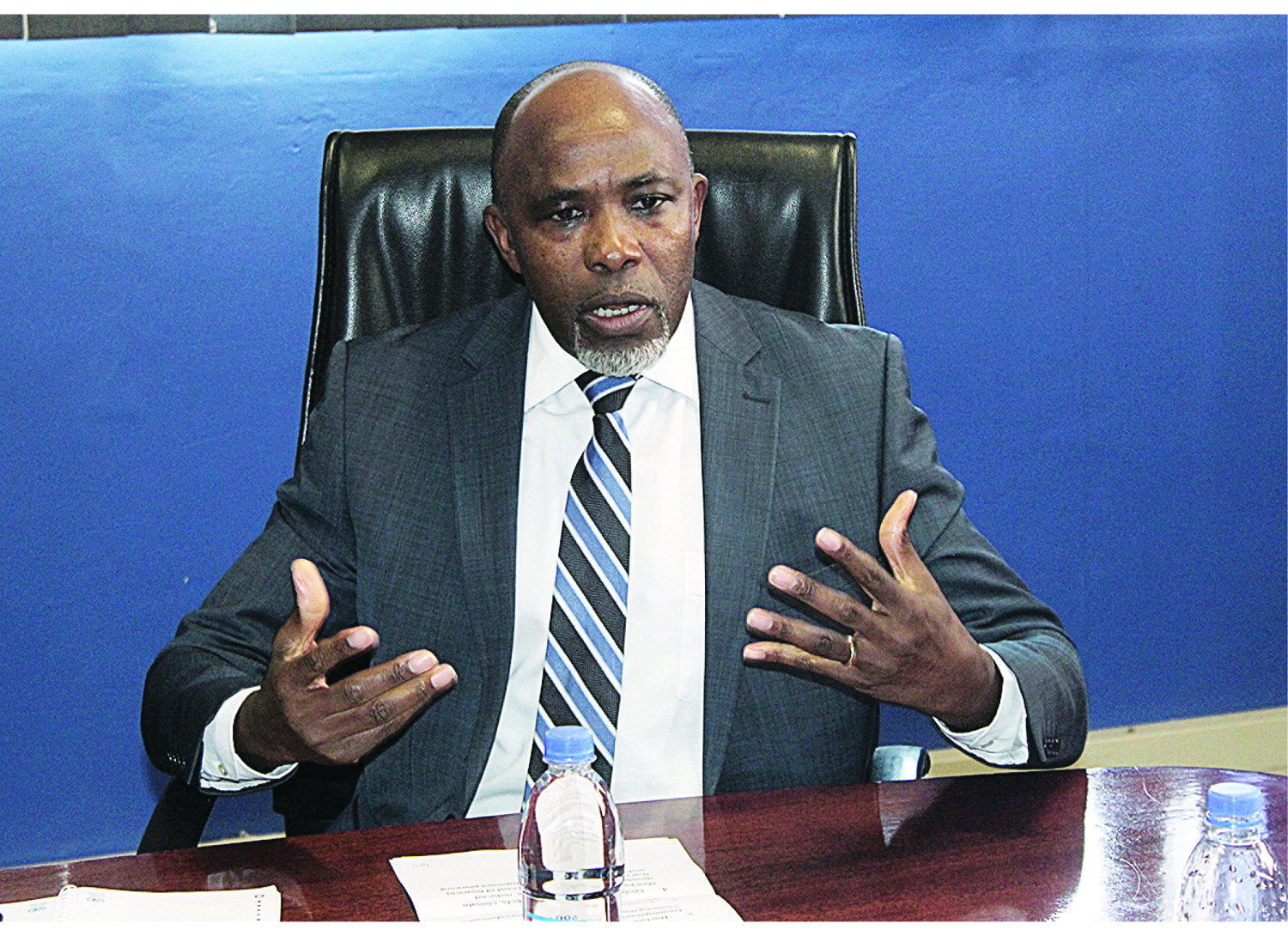
UN Resident Coordinator in Eswatini, George Wachira, has dismissed perceptions that the United Nations is scaling down or withdrawing from the kingdom. Instead, he said its presence is being strengthened under a restructured operating model.
He pointed to the conclusion of the 2021–2025 UN Cooperation Framework in December 2025, noting that 17 UN agencies had been implementing the framework over the previous five years.
“For the 2021 to 2025 cycle, we had 17 agencies signing the agreement to implement it, while the newly launched framework now includes 21 agencies, an increase of four,” said Wachira.
“So that is the true story; it is not that the United Nation’s presence is reducing or withdrawing, but rather it depends on where each entity is located while still covering Eswatini.”
He explained that globally, some UN agencies are relocating from expensive duty stations such as New York, to more cost-efficient locations closer to the regions they serve. This shift has also led to the establishment of multi-country offices, where a single representative may cover several countries within a region.
For example, UNFPA has its accredited representative based in Pretoria, South Africa, covering Eswatini, Lesotho, and Botswana under one arrangement. While the representative is based in another country, he said staff members remain in Eswatini and continue to implement programmes locally.
“What changes is where the representative is located and how many countries they cover as one representative,” he said.
Wachira stressed that the UN is not withdrawing from Eswatini. “It is not like the United Nations is walking away. In fact, it will not walk away, but what is changing is the mode of organisation and of course, as a way of reducing operational costs,” he said.
He explained that in some cases, rather than having a representative in every country, the UN appoints one representative to cover multiple countries while staff remains on the ground. However, he confirmed that Eswatini will continue to host the UN resident coordinator office to ensure national coordination of UN activities.
Wachira also acknowledged that staffing levels could fluctuate depending on funding availability.
“Of course, as you know, resources diminish, we have had instances where staff was downsized because some programmes they were implementing were not funded anymore,” he said. “So at that point, the staff would have to leave and as soon as new projects open, there is likelihood of those staff members being called back.”
Asked to name a UN agency locally that had undergone such a situation, he pointed out the United Nations Children’s Fund (UNICEF), noting that a specific project had ended and led to reduced staffing, though he could not recall the project name.
“But UNICEF remains in the Kingdom of Eswatini. No entity has actually left. Instead, we have more entities that are implementing the new cooperation framework,” he said.
He further noted that under the new arrangement, agencies such as UNFPA, whose representative is based in Pretoria, and UNICEF, which also has its country representative based in South Africa, will continue to support Eswatini.
Wachira emphasised that these changes reflect broader UN reforms aimed at improving efficiency, coordination, and impact in delivering sustainable development goals, rather than a reduction in presence. He reiterated that despite structural adjustments, the UN’s commitment to Eswatini remained unchanged and its development partnership with government continued to guide all programmes.
Overall, he said the changes should not be interpreted as withdrawal, but as an evolution in how the UN operates to better serve countries in the region.