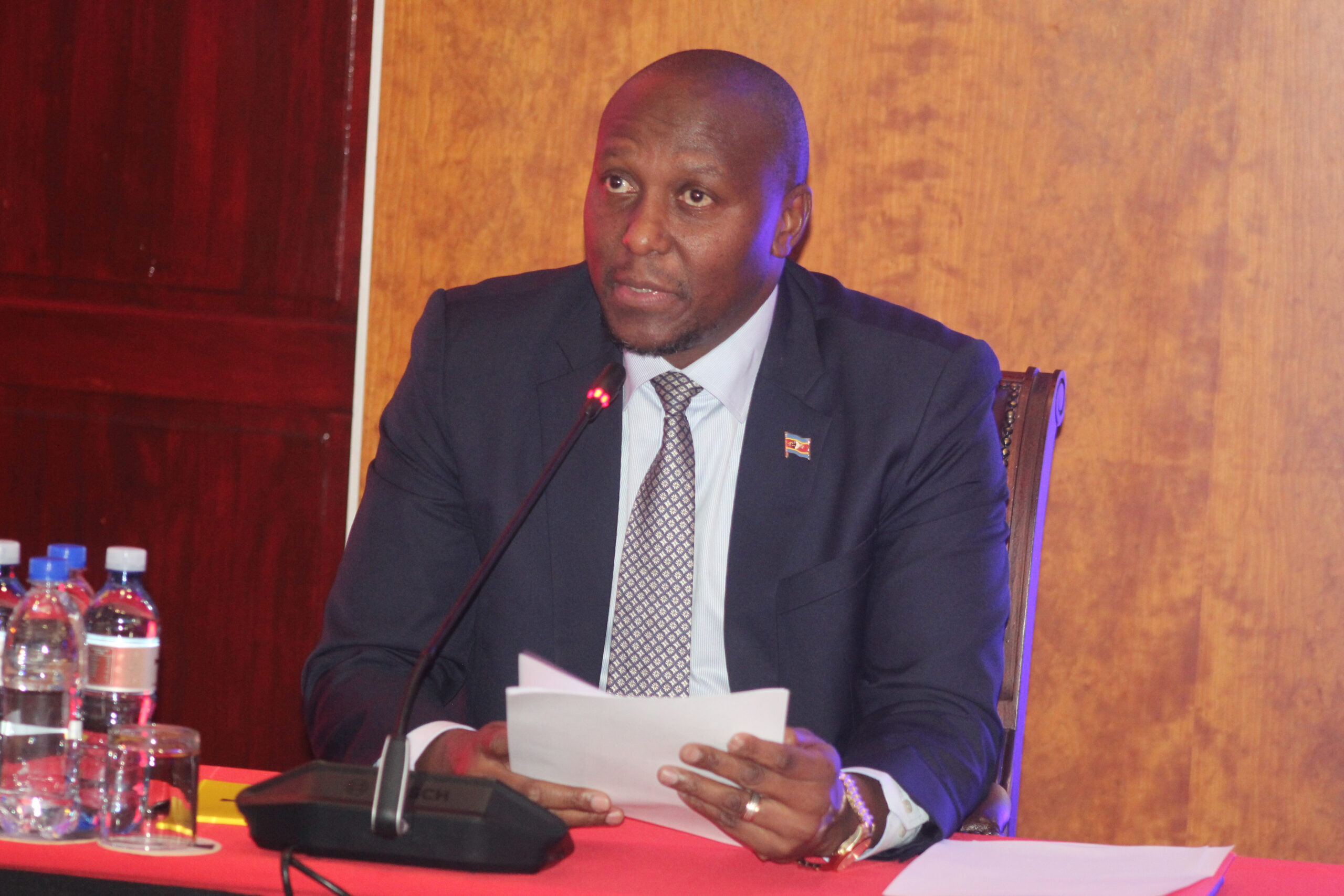
Mbabane East Member of Parliament (MP) Welcome Dlamini’s motion questioning Prime Minister Russell Mmiso Dlamini’s leadership style is the latest in a growing series of parliamentary interventions that have placed the chairperson of the Executive under scrutiny.
Since the opening of the current parliamentary session, a number of MPs, including some serving as Cabinet ministers, have publicly questioned the premier on issues ranging from budget allocations and governance processes to education policy and the handling of major national projects.
Among those who have openly challenged decisions taken by the premier are Lobamba Lomdzala MP Marwick Khumalo, Nkwene MP and Minister of Tinkhundla Administration and Development Sikhumbuzo Dlamini, Manzini South MP and Minister of Education and Training Owen Nxumalo, appointed MP and Minister of Commerce, Industry and Trade Manqoba Khumalo, and more recently Mbabane East MP Welcome Dlamini and Ngudzeni MP Charles Ndlovu.
MP Khumalo, who chairs the House of Assembly’s Finance Portfolio Committee, was at the centre of the recent E400 million budget dispute after his committee proposed sweeping changes to government spending, including significant reductions to allocations under the prime minister’s office.
During a debate on the PM’s budget, Khumalo rejected suggestions that his disagreements with the premier were personal, arguing that they stemmed from concerns about legality and governance.
“I have no qualms with him, but we will never get along with a parliamentarian that breaks the law,” Khumalo told the House, while also accusing the prime minister of sidelining ministers by engaging directly with principal secretaries, a practice he said had contributed to tensions within Cabinet.
The minister of tinkhundla administration and development also found himself publicly at odds with the premier during debate on the budget. The minister questioned an E16 million allocation made to his ministry, telling Parliament neither he nor his officials had requested or been consulted about the funds.
His intervention directly contradicted the PM’s explanation that the allocation had been intended to strengthen regional offices and improve service delivery. Despite that explanation, the minister maintained that it was deeply problematic for a ministry to discover funds had been budgeted in its name without its knowledge.
Minister Nxumalo has also publicly differed with the PM on a number of issues. Most recently, he questioned aspects of decision-making within government, warning Parliament that “egos are at play” in the rollout of the Grade 0 programme while arguing strongly that the long-delayed SADC University of Transformation should fall under the ministry of education rather than remain under the PM’s Office.
Minister Manqoba Khumalo entered the debate over the Google Memorandum of Understanding (MoU) by offering an account that contrasted with that of the PM. While the premier raised questions about the agreement’s approval process, value and legitimacy, Khumalo defended both the deal and ICT Minister Savannah Maziya, describing the MoU as an important milestone in efforts to attract investment and position the country within the digital economy.
He further rejected suggestions that the agreement had bypassed Executive processes, maintaining that Cabinet had discussed and approved it.
“We were all there,” he said, directly countering the PM’s account, while warning that criticism of the agreement risked damaging investor confidence and undermining the country’s broader investment agenda.
The Mbabane East MP’s scrutiny of the PM did not begin with this week’s motion. During the recent budget debates, he questioned whether remarks made by the premier in the Senate suggesting that some MPs may be influenced by bribes risked bringing Parliament into disrepute.
He further asked whether such statements, made without evidence being presented to the House, ought to trigger formal disciplinary or investigative processes.
Against that backdrop, MP Welcome and Ngudzeni MP Charles Ndlovu this week sponsored a motion requiring the premier to return to Parliament within a month and explain how his self-described “disruptive” leadership style aligns with the principles of the Tinkhundla system, what implications it has for collective responsibility within Cabinet and what measurable outcomes it has produced since he assumed office.
Moving the motion, MP Welcome told MPs that his interest in the issue began after hearing the chairperson of the Executive publicly describe his administration as practising disruptive leadership. He pointed to both the government’s policy statement and a televised interview in which the premier discussed disruptive leadership as part of his administration’s governing philosophy.
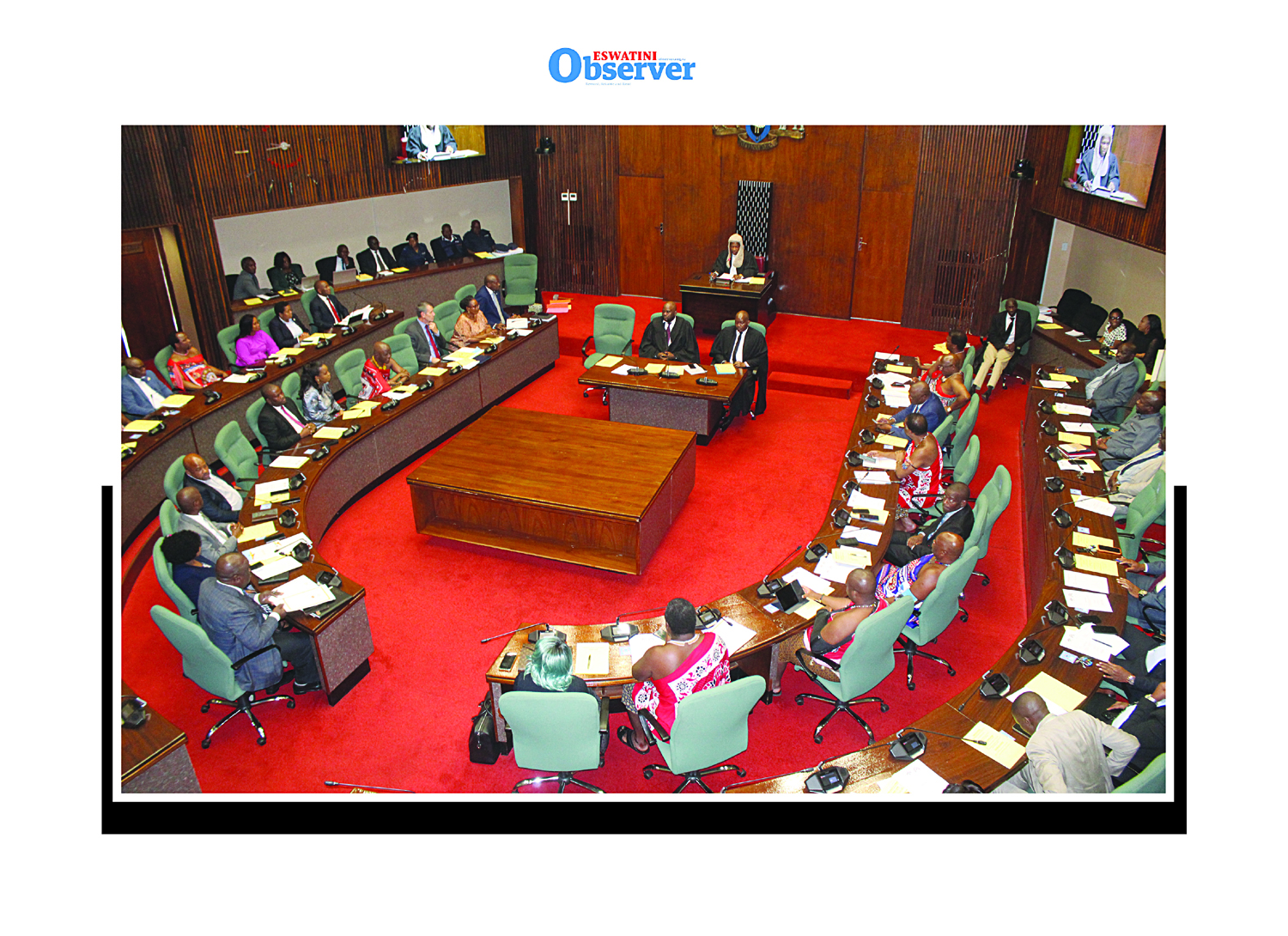
“This displays, Speaker, that it was not my personal opinion. This is what the honourable PM said,” Dlamini told the House.
In the Eswatini TV interview aired on April 1, 2026, and cited during the debate, the PM described disruptive leadership as an approach that challenges established practices and systems.
MP Welcome said he subsequently undertook his own research into the concept and found definitions describing it as a leadership approach that deliberately challenges established institutional norms and governance practices.
“In political science, disruptive leadership style refers to a political approach where leaders actively upend established institutional norms, break from traditional governance protocols and mobilise alternative narratives to challenge the current status quo,” he told MPs.
Armed with that understanding, the MP said he began examining developments that had unfolded during the current administration and concluded that Parliament was entitled to seek clarity on how the concept was being applied in practice.
“It is very beneficial when a person in the position of the PM comes out to state how he intends to lead Cabinet and also preside over the current administration,” he said.
According to the MP, the motion seeks an explanation of how disruptive leadership fits within the constitutional framework of the Tinkhundla system, which places considerable emphasis on consultation, consensus-building and collective decision-making.
“It also seeks an explanation of how the approach affects Cabinet cohesion and collective responsibility. In addition, it requests specific examples, timelines and measurable indicators that would allow Parliament to assess the impact of the leadership approach on governance and service delivery,” he added.
Among the examples cited by the MP was the prolonged process to appoint a substantive chief executive officer at the Royal Science and Technology Park, a position that has remained vacant for about three years following the non-renewal of Vumile Dlamini’s contract.
He questioned reports that the manner in which the appointment was considered differed from established Cabinet practice.
“We have been made to believe that in this specific instance it was not the honourable minister for ICT who brought the paper to Cabinet containing the name of the person recommended for the position,” he said.
He further questioned reports regarding how voting was conducted, alleging that the process departed from the traditional Cabinet practice of voting by a show of hands and instead mirrored Parliament’s ‘ayes and nays’ system.
“Is that also part of the disruptive style of leadership where we are breaking protocol and by so doing opening potential lawsuits against government?” he asked.
The MP also pointed to the unprecedented dispute that emerged during passage of the national budget, during which the PM questioned whether MPs were making decisions because of bribes.
“This country, for the first time in my recollection, nearly saw the budget not being passed,” he told MPs, arguing that disagreements over budget procedures had brought the two Houses of Parliament into conflict.
He asked whether those developments reflected elements of the disruptive leadership approach described by the premier.
Seconding the motion, MP Ndlovu said he had also taken time to study disruptive leadership after hearing the PM publicly embrace the concept.
“I also made a desktop research on which leadership styles African countries use,” he told the House.
According to Ndlovu, his findings suggested that many African governments rely on participatory leadership models centred on consultation, inclusion and consensus-building.
“Most of them use participatory leadership style of consensus,” he stated.
Against that backdrop, Ndlovu questioned why the PM had chosen a different approach.
“There are very few leaders who use this style, so I ask why the PM chose this leadership style because he is not the final decision-maker in the country,” he said.
He further linked the issue to recent controversies involving government decision-making, including reported tensions between ministers and principal secretaries.
“There’s the matter of meeting principal secretaries without Cabinet ministers, undermining the ministers. Is that part of the leadership style?” he asked.
After the motion was moved and seconded, the PM requested that debate be adjourned to allow him time to prepare a response, saying some of the matters raised required proper consideration. The House agreed and adopted the motion.
The PM’s response, expected within the next month, is likely to provide the clearest explanation yet of what he means by disruptive leadership, why his administration adopted the approach and what outcomes it believes it has achieved.