



The Central Bank of Eswatini (CBE) will introduce a new E10 commemorative coin that will circulate alongside the existing E10 banknote.
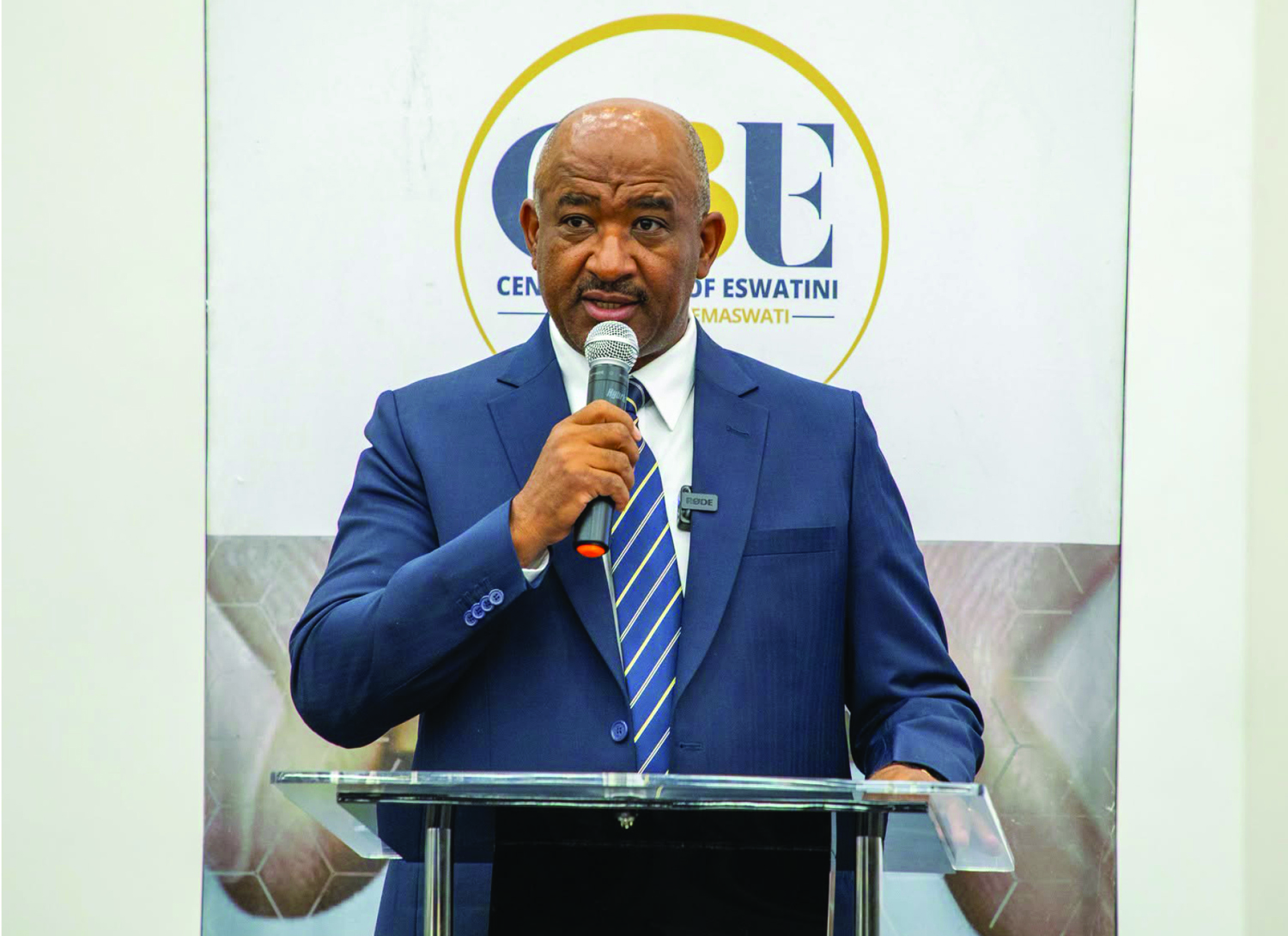
CBE Governor Dr Phil Mnisi made the announcement during the launch of the E10 60th Independence Anniversary Commemorative Coin Design Concept Competition at the CBE Complex in Ezulwini yesterday.
The coin will form part of preparations for the country’s 60th Independence Anniversary in 2028. It will be issued as a limited-edition circulating commemorative coin.
Mnisi clarified that the introduction of the coin will not result in the withdrawal of the current E10 banknote.
“Once the new E10 commemorative coin is released into circulation, it will co-circulate with the current E10 banknote,” Mnisi said.
The move could have significance beyond the country’s diamond jubilee celebrations, as the CBE intends to use the initiative to assess public acceptance of higher-denomination coins within Eswatini’s currency system.
Mnisi said the minting of the commemorative coin formed part of the bank’s approved operational projects for the 2026/27 financial year and falls within its core mandate to issue and redeem currency.
He stated that the E10 denomination was selected for both strategic and practical reasons, pointing to the high circulation and frequent use of the E10 banknote.
“The E10 banknote remains one of the most widely used denominations in circulation and consequently experiences significant wear and tear,” Mnisi said.
He noted that replacing worn banknotes carries considerable costs over time, while coins generally have substantially longer circulation lives.
According to the governor, coins typically remain in circulation for between 20 and 50 years, compared with banknotes, which generally last between one and five years.
“The introduction of the E10 coin therefore provides an opportunity to improve efficiency while maintaining the quality and reliability of currency available to the public,” he said.
The initiative therefore provides the CBE with an opportunity to examine whether greater use of coins at higher denominations could contribute to more efficient currency management.
At the same time, the bank will have to gauge how consumers, retailers and other businesses respond to having the E10 denomination available in both coin and banknote form.
While the coin has a currency-management objective, the CBE is also positioning it as a national symbol ahead of the 2028 independence celebrations.
Mnisi explained that a commemorative coin is more than a medium of exchange because it can tell the story of a country’s identity, culture, achievements and aspirations. Consequently, he called on Emaswati from across the country to participate in designing the coin.
The proposed E10 coin would not be the first Eswatini banknote denomination to make the transition to coins.
When the lilangeni was introduced in 1974, E1, E2, E5 and E10 notes were issued. In 1995, the E2 and E5 notes were replaced by coins, while E2 and E5 coins had already been introduced into the currency system alongside other denominations.
The E5 coin was subsequently issued to the public in 1996, marking an expansion of higher-value coin denominations.
Winner Prize Breakdown:
-
1st Prize: E100 000 Treasury Bills
-
2nd Prize: E30 000 Treasury Bills
-
3rd Prize: E20 000 Treasury Bills
-
Total Prize Pool: E150 000
E150 000 Treasury Bill Prize Pool for Coin Designers
The Central Bank of Eswatini (CBE) has put a combined E150 000 in Treasury Bills on the table for the top three winners of its E10 commemorative coin design competition.
The investment-linked prizes form part of the bank’s initiative to mark Eswatini’s 60th Independence Anniversary in 2028, while using the competition to promote saving, investment and financial inclusion.
Treasury Bills are short-term government securities through which investors lend money to the government for a specified period in return for a financial return. They are generally regarded as relatively low-risk investment instruments because they are backed by the government.
The first-prize winner will receive Treasury Bills valued at E100 000, while the second and third-prize winners will receive Treasury Bills worth E30 000 and E20 000, respectively.
The prizes are not being offered as cash awards, but as government investment instruments, aligning the competition with the CBE’s broader efforts to encourage Emaswati to participate in saving and investment.
CBE Governor Dr Phil Mnisi said the prize structure was deliberately designed to ensure that the benefits of winning extend beyond recognition for the winning designs.

“These awards are intended to extend the impact of the competition beyond the immediate recognition of the winning participants,” Mnisi said.
He said the prize structure supports the bank’s broader objectives of promoting an investment culture while advancing financial literacy and financial inclusion.
The competition itself is linked to the planned introduction of an E10 limited-edition circulating commemorative coin, which will circulate alongside the existing E10 banknote.
The competition opens from today and closes on October 26. It is open to all Emaswati, with entries accepted through designated EPTC Post Office branches and online through a website to be announced by the CBE.