




Pastors are among the country’s biggest clients of sex workers, a trend that reflects deeper identity and mental health struggles that many men silently battle.
This was revealed by Pastor and Counsellor Clement Dlamini. Dlamini made the remarks during a men’s mental health discussion held as part of The Clinic Group’s Annual Family Fun Day – Father’s Day Edition at Manzini Clinic yesterday. Held under the theme, ‘Strong families start with healthy men’, the event promoted family wellness and mental health awareness by offering health talks, access to mental health professionals, family activities and health education.
Addressing attendees during the Esangweni Health Talks, Dlamini said many men sought validation through unhealthy means because they had never developed a secure sense of identity.
He said one of the greatest misconceptions among men was believing that their worth was determined by the number of women they slept with, instead of recognising that their value was inherent.
According to Dlamini, this distorted understanding of masculinity often persisted even after marriage, leaving some men dissatisfied and searching for fulfilment elsewhere.
Drawing from his experience as both a pastor and counsellor, he revealed that he had counselled pastors who had become involved with other women despite being married.
“I have counselled pastors, who have come to me after becoming involved with other women. Some even end up buying sex,” he said.
Dlamini further claimed that available data placed pastors among the largest consumers of sex work in the country.
“Pastors are number two among the biggest buyers of sex work. They are often willing to pay higher prices because they are protecting their identities and reputations. However, when you investigate what is happening at home, you often discover that there are unresolved issues and unmet emotional needs,” he said.
He stressed that such behaviour was not simply about sexual desire, but pointed to deeper emotional and psychological challenges rooted in identity.
“If you do not develop your own identity, you will continue searching for it in other people. You become dependent on external validation because you never formed your own sense of self,” he said.
Dlamini urged men to reject the growing narrative that faithful or good women no longer existed, saying healthy relationships remained possible when individuals entered them with emotional maturity and a clear sense of identity.
Turning to the role of the church, Dlamini said faith communities needed to rethink how they responded to people experiencing mental health challenges.
He said churches were often too quick to prescribe prayer alone whenever someone presented symptoms of depression or anxiety.
“We are quick to tell people to pray or simply read the Bible whenever they are struggling. Prayer is important, but we also need to understand what people are going through before we pray with them,” he said.
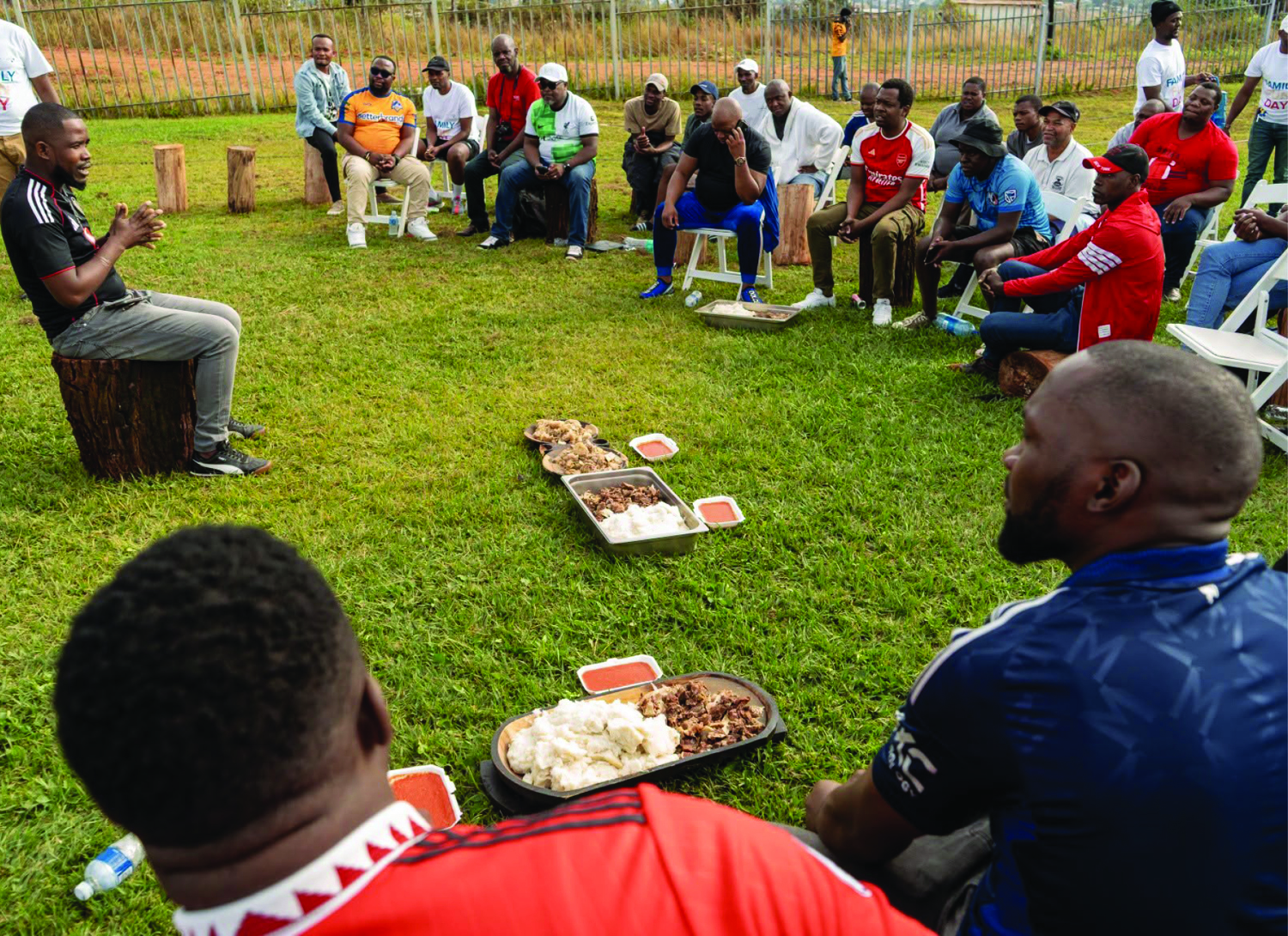
Dlamini explained that during altar calls at his church, he instructed ushers to first ask congregants how they were doing before praying for them.
He said this simple question frequently uncovered hidden emotional pain that might otherwise be mistaken for a purely spiritual experience.
“There may be situations where we think someone is being touched by the Holy Spirit, when in fact they are carrying a heavy burden from home. Once we understand what is troubling them, we can pray with greater understanding,” he said.
Beyond the church, Dlamini encouraged fathers to cultivate open communication with their children by consistently checking on their emotional wellbeing.
He said asking children about their day at school should not be viewed as suspicion, but as an expression of care that created opportunities for them to speak about challenges such as bullying before those problems escalated.
“If a child is being bullied and nobody asks how school was, that pain continues to build. Eventually, the child may respond in harmful ways because they never had the opportunity to speak,” he said.
He added that children valued emotional presence more than material provision.
“Our children are not interested in how much we have. They are interested in how much we care,” he said.
The annual Family Fun Day sought to encourage families to place greater emphasis on men’s mental health, recognising that healthy men contribute to healthier families and communities.