


Government is courting Taiwanese packaging companies to establish manufacturing operations in the country as it seeks to reduce reliance on imported packaging materials and strengthen the country’s export value chains.
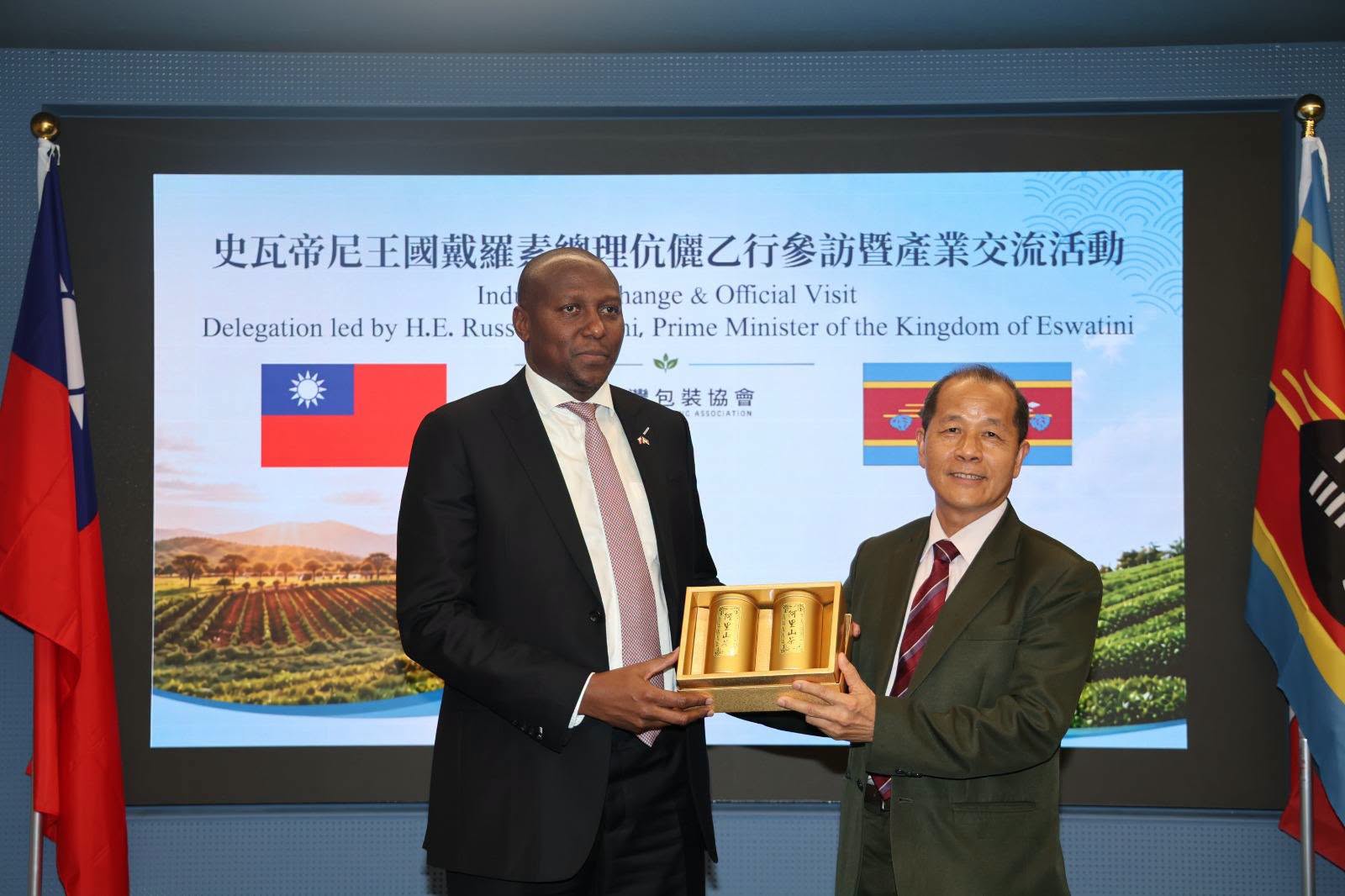
Prime Minister Russell Mmiso Dlamini, who is currently in the Republic of China (Taiwan), held strategic trade talks with representatives of the Taiwan Packaging Association in Taipei yesterday.
The discussions focused on investment, partnerships and skills transfer to support the growth of the country’s manufacturing sector.
Dlamini told the delegation that most packaging materials used by companies in the country were currently imported, despite growing demand from key export industries such as sugar, citrus, vegetables and coffee.
He said developing a world-class packaging industry locally would create opportunities for value addition while generating employment and supporting the country’s industrialisation agenda.
“Many companies operating in Eswatini currently import their packaging materials. As you consider partnering with Eswatini, it is important to appreciate that packaging is value addition and value addition translates into job creation.
“Our vision is to build an export-oriented economy and your industry can play a significant role in helping us realise that vision,” said Dlamini.
The prime minister said local production of packaging would also allow more economic value to be retained within the country while strengthening the competitiveness of Emaswati producers seeking to access international markets.
He further presented the country’s plans for exponential economic growth through industrialisation, highlighting the forthcoming Taiwan Innovation Industrial Hub at Phocweni as a potential base for Taiwanese investors.
The hub is being developed to provide Taiwanese companies with a strategic location from which they can manufacture in Eswatini and access the wider African market through the African Continental Free Trade Area (AfCFTA), which connects a market of more than 1.4 billion people.
Taiwan Packaging Association Chairman Biao Kuo, who is also General Manager of JewFeng Machinery Co. Ltd, welcomed the engagement and said the association was interested in exploring investment opportunities locally.
Kuo said the association represented more than 300 companies, most of which were micro, small and medium-sized enterprises operating in the packaging sector.
The companies provide packaging solutions for industries including healthcare, chemicals and consumer goods, with technical capabilities aimed at maintaining product quality during storage and transportation.
“With more than 300 member companies, we have more than enough expertise and capacity to assess Eswatini’s needs and identify opportunities for meaningful collaboration,” said Kuo.
The engagement forms part of Dlamini’s investment promotion programme in Taiwan, which is aimed at attracting strategic industries to accelerate industrialisation, create employment and advance the country’s economic transformation agenda.
The proposed packaging investment would also complement the country’s agricultural and manufacturing sectors by creating a local link between production, packaging and export markets.

Government’s pitch to the Taiwan association comes as Eswatini seeks to move beyond exporting largely raw or minimally processed products by expanding domestic manufacturing and value addition.
MIDDLE EAST CONFLICT PUSHING UP LOCAL FOOD PRICES
The ongoing conflict in the Middle East is no longer just a distant geopolitical crisis but is increasingly affecting the cost of putting food on the table for Emaswati.
The latest Integrated Food Security Phase Classification (IPC) Acute Food Insecurity Analysis has identified global instability, particularly the 2026 conflict in the Middle East, as one of the major factors driving food insecurity in the country through rising fuel prices, higher shipping costs and increasing prices of imported food commodities.
According to the report, prices of food, agricultural inputs and fuel have remained significantly above the five-year average because of disruptions in international supply chains.
Analysts say the conflict has weakened household purchasing power as families spend more of their income on basic necessities.
The report explains that Eswatini remains highly vulnerable to international market shocks because the country depends heavily on imports for many essential food commodities.
Rising fuel prices have increased transport and shipping costs, which are eventually passed on to consumers through higher retail food prices.
It states that while international food markets have shown some signs of stabilising, domestic prices in the kingdom remain elevated due to a combination of regional demand, currency fluctuations, expensive agricultural inputs, transport inflation and fuel price increases linked to geopolitical tensions.
These factors continue to erode household purchasing power, particularly among poor families who already spend a large proportion of their income on food.
The IPC analysis further notes that vulnerable households are finding it increasingly difficult to cope with rising living costs as limited employment opportunities and reduced economic activity continue to suppress household incomes.
The result is that many families are unable to afford adequate and nutritious food despite markets remaining stocked.
Looking ahead, the report warns that international fuel price volatility is expected to continue throughout the October 2026 to March 2027 projection period.
Analysts say ongoing geopolitical tensions are likely to sustain high shipping and logistics costs, translating into even higher import costs for Eswatini.
The report projects that continued increases in food prices will reduce household purchasing power even further, especially among low-income families that rely almost entirely on markets for their food needs.
Combined with declining household incomes, the rising cost of imported commodities is expected to worsen food insecurity during the lean season.
It also highlights concerns over continued disruptions to global supply chains, noting that higher fuel and fertiliser prices are expected to affect agricultural production while increasing the cost of imported food.
With the Strait of Hormuz blockages persisting, analysts expect food prices to continue rising as energy costs increase worldwide.
The IPC recommends strengthening market monitoring, implementing price stabilisation measures and expanding income-generating programmes and social protection to help vulnerable households cope with rising food costs.