



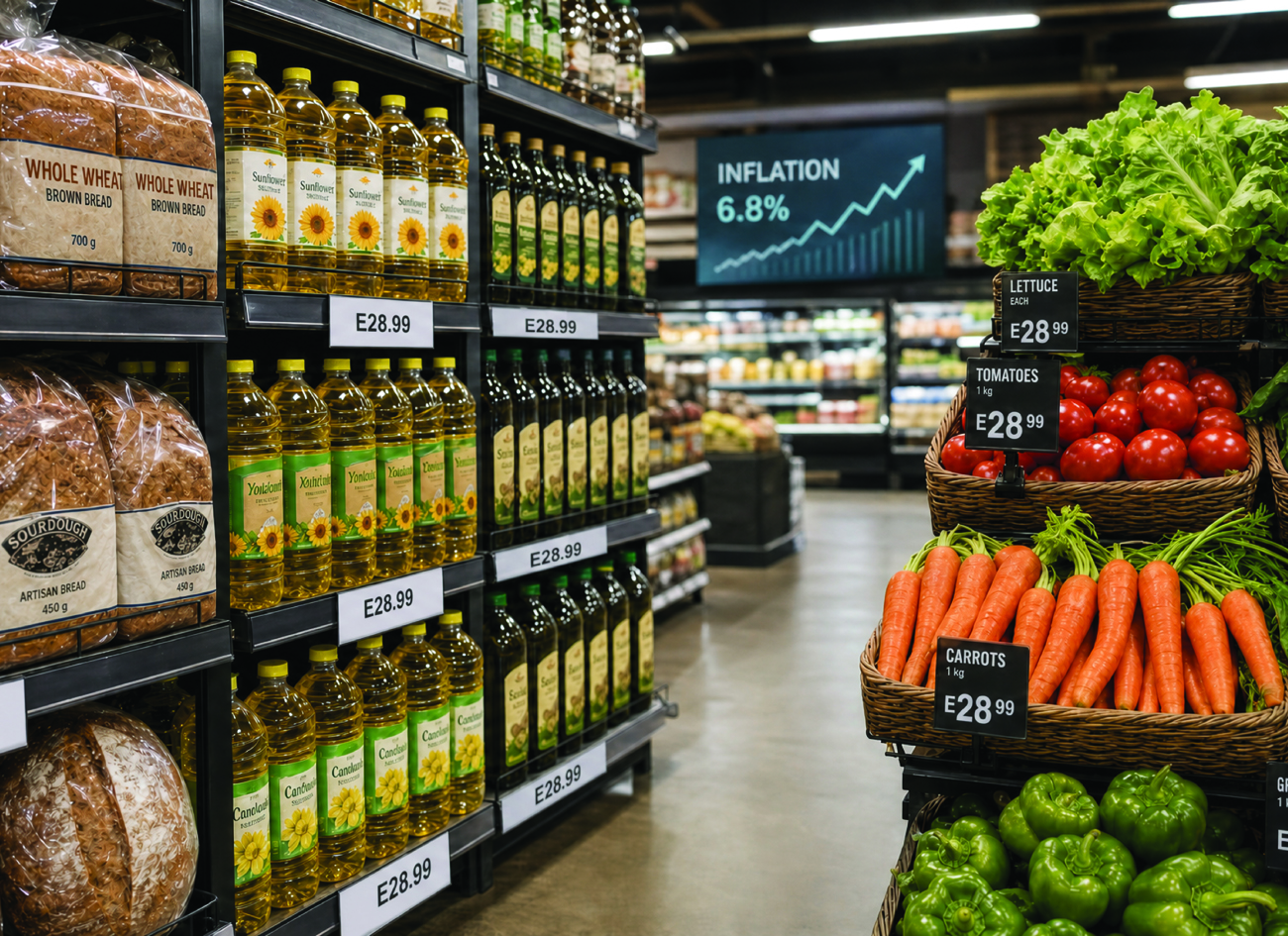
THE country’s inflation rate has increased to 2.7%.
This inflation rate is 0.7 percentage points higher than the 2% observed in April. The 2.7% observed in May 2026 is 0.5 percentage points lower than the inflation rate of 3.2% observed in May 2025.
According to the Consumer Price Index (CPI) May report, the inflation rate for goods is 3.2% and for services 1.9%.
For the month-on-month inflation rate, the percentage change is 0.8%, which is 0.4 percentage points lower than the 1.2% inflation rate observed in April.
Year-on-year highlights show that alcohol beverages, tobacco and narcotics decreased from 10.7% last year to 4.5% in May this year due to slower growth observed in beer and wine.
Food and non-alcoholic beverages decreased from 3.2% in May last year to -1.8% in May this year.
The decline was mainly driven by slower growth rates in coffee, tea and cocoa; and sugar, jam, honey, chocolate and confectionery. In addition, negative growth rates were recorded for bread and cereals within this category.
Health decreased from 4.6% last year to 0.2% in May this year. This was due to zero growth rates observed in medical services and slower growth rates in pharmaceutical products within this category.
Month-on-month highlights indicate that restaurants and hotels increased from 1.1% in April to 5.9% in May 2026, where growth rates were observed mainly in accommodation services. Housing and utilities decreased from 3.9% in April to 1.8% in May and zero growth rates were observed mainly in electricity and water supply.
“Transport increased from 2.4% in April to 2.5% in May where growth rates were observed mainly in passenger transport by air,” reads the report.
Economist Thembinkosi Dube noted that they anticipated a big jump in the transport sector because that is where there was a dramatic fuel hike.
READ MORE | ‘Govt advised to consider strategic debt to power growth’
“For example, I used to spend E600 monthly for fuel and now I spend E900, which is a big change considering that I was not the only person affected by this. As much as I am not sure of the methodology used by the ministry, I am not sure if it is a true reflection of what is on the ground in the past month or two,” Dube said.
Ministry of Economic Planning and Development Statistician Bongumenzi Zwane said the increase in fuel prices and household utilities highly contributed to the upward trend in the inflation rate.
He noted that food inflation has been on a decline since last year, but food prices were stable. He explained that there would be a negative inflation rate if the price shows a decline and the opposite is true.
“The inflation for services is lower than the one for goods, hence the imbalance of 1.9% and 3.2%. Looking ahead, we are still observing the fuel price which changed in June and will take those changes into account. We will also look at the data that will be collected in outlets across the country.
“If the prices remain stable we are likely to see stable inflation and if the prices change, that will have an impact on the inflation rate,” said Zwane.