In development practice, good intentions are not enough. Impact depends on design discipline, technical coherence and the ability to align interventions with the lived realities of communities.
The work of Young Heroes illustrates how a layered, evidence-informed programme strategy can address the intersecting risks faced by children and youth in Eswatini — particularly those affected by HIV, poverty and educational disruption.
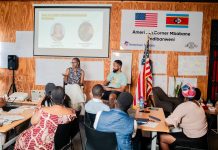
During a recent radio programme hosted by NERCHA, Young Heroes unpacked its operational approach, revealing a model that is less about isolated projects and more about sequencing interventions across a child’s life course.
At the core of the organisation’s strategy is a multi-sectoral programme architecture built around four interdependent pillars: education, health, protection and economic resilience.
Each pillar is designed not as a stand-alone activity, but as a reinforcing mechanism within a broader prevention and care ecosystem.
Education as a Risk Mitigation Platform
Education support functions as the programme’s primary stabilising intervention.
Evidence consistently links school retention to reduced HIV risk, delayed sexual debut and improved health literacy. Young Heroes operationalises this through a structured block grant model implemented in close collaboration with schools and the Ministry of Education.
The model covers school fees, uniforms, learning materials, examination costs and academic support through study clubs. Beneficiaries are enrolled in multi-year support cycles to prevent the common failure point of once-off assistance.
Targeting is guided by vulnerability assessments conducted with school leadership and community structures, ensuring that resources are directed to children at the highest risk of dropout.
Health Integration and HIV Outcomes
Health programming is deliberately embedded within education support rather than delivered in parallel.
Children and youth are linked to government health facilities for HIV testing, treatment initiation and viral load monitoring. For children living with HIV, adherence support is reinforced through teen clubs that provide age-appropriate psychosocial support, HIV literacy and sexual and reproductive health education.
From a technical standpoint, this integration addresses two critical risks: treatment interruption during adolescence and loss to follow-up caused by stigma or mobility.
Programme monitoring focuses on retention in care and viral suppression, aligning directly with national HIV targets.
Addressing Knowledge Gaps Through SBC
National frameworks continue to show gaps in HIV and AIDS knowledge among young people.
The NSF 2024–2028 notes that comprehensive HIV knowledge among youth aged 15–24 remains low — 50.9 per cent for females and 46.5 per cent for males — limiting prevention motivation.
Young Heroes responds through structured Social and Behaviour Change (SBC) interventions delivered in community and digital settings. These sessions go beyond information dissemination, addressing norms, self-efficacy, risk perception and decision-making.
Messaging is segmented by age and vulnerability profile, recognising that a 12-year-old and a 19-year-old face different risks and developmental realities.
Caregiver engagement reinforces these messages, creating consistency between school, home and community environments.
Protection and Referral Systems
Exposure to gender-based violence remains a cross-cutting risk for children and youth.
Young Heroes’ role is not to replace statutory services, but to strengthen referral and case linkage pathways. Community facilitators are trained to identify early warning signs of abuse and activate formal systems, including social welfare, law enforcement, one-stop centres and the national 116 helpline.
This approach reduces secondary trauma by ensuring survivors access professional services while remaining supported at community level.
Economic Resilience and Transition Support
A key vulnerability point occurs when youth exit secondary education.
Without livelihood pathways, gains achieved through education and health interventions can quickly erode. Young Heroes integrates skills training and economic empowerment linkages for older adolescents and youth, connecting them to vocational programmes and income-generation opportunities.
From a prevention perspective, economic agency functions as a protective factor against transactional sex, unsafe migration and treatment interruption.
Community and Caregiver Engagement
Programme sustainability is anchored in household and community ownership.
Parenting support interventions strengthen caregiver capacity around positive discipline, communication and adolescent development.
Chiefs, community leaders and caregivers are engaged as gatekeepers and accountability partners, reinforcing programme norms and uptake.
Monitoring, Learning and Adaptation
Impact measurement is embedded across all programme components.
Key indicators include school retention and progression, HIV knowledge outcomes, viral suppression among children and caregivers living with HIV, and successful referrals to protection services.
Data is used not only for reporting, but for adaptive management — allowing programme teams to refine targeting and delivery in response to emerging risks.
What emerges from this strategy is a coherent prevention and care model — one that recognises children’s outcomes are shaped by overlapping systems, not single interventions.
The integration of HIV prevention into educational programming represents a prevailing strategy in the fight against HIV and AIDS. By empowering young people with knowledge, skills and access to resources, communities can significantly reduce new infections and create a generation that is informed, healthy and resilient.
As the sector evolves, the opportunity lies in redefining the role of education within public health — laying the foundation for a healthier future.