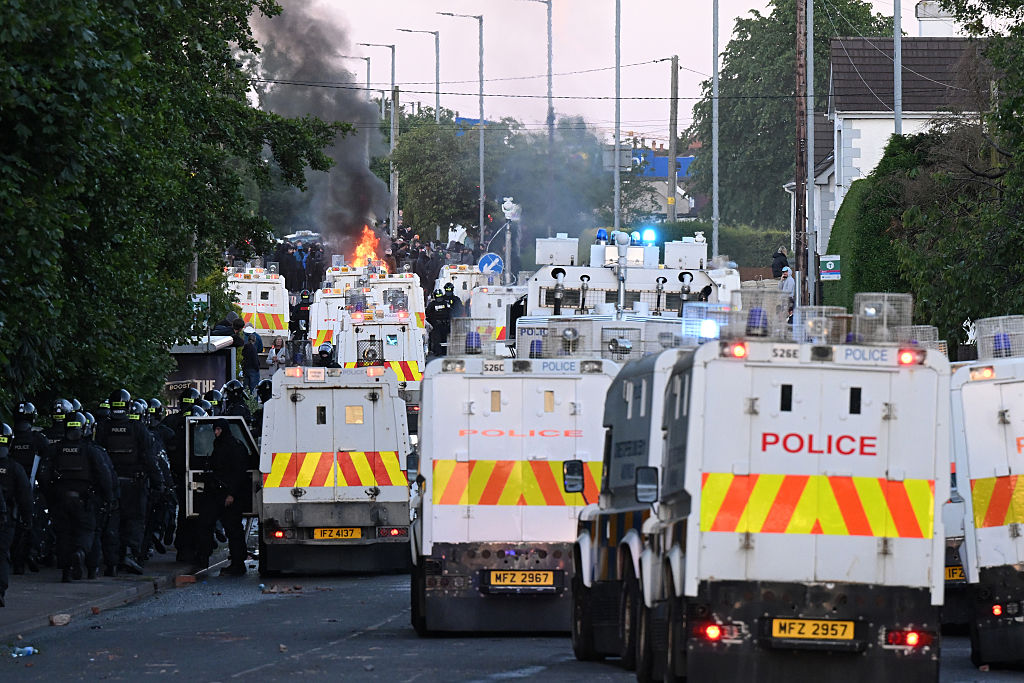
Concern is growing among locals living in Northern Ireland following violent unrest in Belfast that saw homes, vehicles and businesses set alight amid anti-migrant tensions.
The disturbances erupted after the arrest of a Sudanese-born man in connection with a brutal knife attack that left a local resident seriously injured.
A local citizen who resides in the southern part of that country revealed that the tensions have not yet reached his area, but he has been informed by fellow countrymen living in Belfast that the situation remains volatile and that assets such as cars and houses continue to be burnt overnight as black people are targeted.
“I have been informed by my friends residing in Belfast that the situation continues to be volatile, as more houses and cars, mainly belonging to black people, are being targeted and burnt down.
“However, there are no reports of a citizen from the kingdom who has been violently attacked or had his property burnt as yet,” he said.
The violence raised concerns among locals in the diaspora community in Northern Ireland, where a number of Emaswati have settled over the years for employment and other opportunities.
![Protesters, many masked, blocked roads and torched cars and buildings in Belfast, Northern Ireland [AFP]](https://www.eswatiniobserver.com/wp-content/uploads/2026/06/Ireland.jpg)
Although there have been no confirmed reports of locals being directly targeted or harmed during the violence, fears remain that the anti-migrant sentiment displayed during the protests could place foreign nationals at risk.
Some reports circulating online claimed that protesters were attempting to identify homes occupied by migrants.
The suspect, described by police as a 30-year-old asylum seeker who had later been granted indefinite leave to remain in the United Kingdom, has since been charged with attempted murder and is expected to appear in court. However, the incident triggered widespread disorder in parts of Belfast, with hundreds of masked protesters taking to the streets.
Political leaders in Northern Ireland and the United Kingdom strongly condemned the violence.
Northern Ireland First Minister Michelle O’Neill described the scenes as ‘outright thuggery’, saying “groups of masked men burning families out of their homes is nothing less than disgusting cowardice.”
British Prime Minister Sir Keir Starmer also denounced the unrest, calling it ‘shocking and completely unacceptable’ and stressing that violence against people because of their background would not be tolerated.
The developments have renewed debate around immigration and border controls within the United Kingdom and Ireland.
It emerged that the Sudanese suspect had travelled from the Republic of Ireland to Northern Ireland under the Common Travel Area arrangement, which allows free movement between the two jurisdictions without routine passport checks.
The victim of the stabbing has been identified locally as Stephen Ogilvie, a man believed to be in his 40s, who remained in a serious condition in hospital at the time of publication. It is understood that he lived in the same social housing complex as the accused.
When contacted, Minister of Foreign Affairs Pholile Shakantu requested a questionnaire which was sent; however, there was no response at the time of going to print.
She had been asked if the ministry has established whether any local living in that country had been impacted and if there were measures in place to provide assistance or consular support should they require it.